



By NAN Business Editor
News Americas, NEW YORK, NY, Fri. Mar. 27, 2026: Guyana’s transformation into one of the world’s fastest-growing oil economies is accelerating, with billions of dollars in production and revenue reshaping the country’s economic future. But as output surges and development costs are steadily repaid, a critical question is emerging: who ultimately controls the wealth being generated?
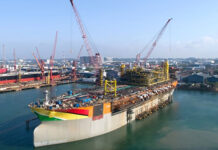
Over the past five years, Guyana has moved from a frontier oil producer to a major global energy player. Production has rapidly expanded across multiple offshore projects led by ExxonMobil and its partners, with output now approaching nearly one million barrels per day. This dramatic rise has positioned Guyana as one of the most significant new oil producers globally.
At the same time, the country is nearing a key financial milestone. Billions of dollars in development costs – initially fronted by oil companies- are expected to be largely recovered by the end of 2026. This cost recovery phase has long been central to Guyana’s production sharing agreement, which allows companies to recoup investments before full profit sharing takes effect.
However, even as cost recovery nears completion, uncertainty remains around the timeline and structure of Guyana’s full profit realization. While the agreement includes a 50 percent profit-sharing framework, the pace at which Guyana will benefit from that full share remains subject to production dynamics, ongoing project costs, and the broader contractual structure in the Exxon contract.
For many observers, the issue is no longer whether Guyana will generate wealth – but how much of that wealth will remain within the country.
“The issue is no longer growth – it’s control,” said Felicia J. Persaud, the Guyana-born, CEO of Invest Caribbean and founder of AI Capital Exchange. “The next phase for Guyana is not about increasing production, but about increasing participation in the value chain.”
That distinction is critical. While oil revenues are already boosting Guyana’s GDP and government income, long-term economic impact will depend on how effectively the country captures value beyond extraction. This includes local participation in services, infrastructure development, downstream industries, and financial structuring.
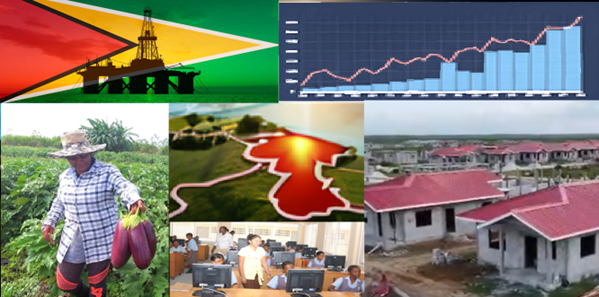
The stakes are significant. At current production levels, Guyana’s oil sector is generating billions annually, creating unprecedented fiscal space for national development. Yet, without strong systems to channel and structure that capital, much of the economic benefit risks flowing outward through existing global energy and financial networks. Despite becoming one of the world’s fastest-growing economies due to oil, Guyana faces high poverty, with estimates suggesting 38% to over 50% of the population lives below the poverty line, particularly affecting indigenous communities. Rapid economic growth has not yet fully translated into broad-based prosperity, resulting in high inequality, significant emigration, and rising costs of living
This dynamic is not unique to Guyana. Across the Caribbean, countries are increasingly navigating a similar challenge: how to convert growth into structured, retained wealth. From tourism to energy to financial services, the region is seeing rising revenues—but also facing persistent gaps in capital access, deal structuring, and investment alignment.
Guyana’s case, however, is the most visible example of this transition. As one of the world’s newest oil economies, it represents both the promise and the complexity of resource-driven growth in a globalized system.
The next phase of Guyana’s development will depend on how it navigates this shift—from production to participation, from revenue to control.
As global capital continues to move and reposition, the question for Guyana is no longer whether it can grow, but whether it can structure that growth in a way that ensures long-term national benefit.
Because in today’s global economy, generating billions is only the beginning.