




By News Americas Staff Writer
News Americas, CASTRIES, St. Lucia, Tues. Feb. 17, 2026: A recent U.S. military strike targeting alleged drug traffickers in Caribbean waters is raising urgent geopolitical, legal, and sovereignty questions across the region, after reports emerged that nationals of St. Lucia may have been among those killed.
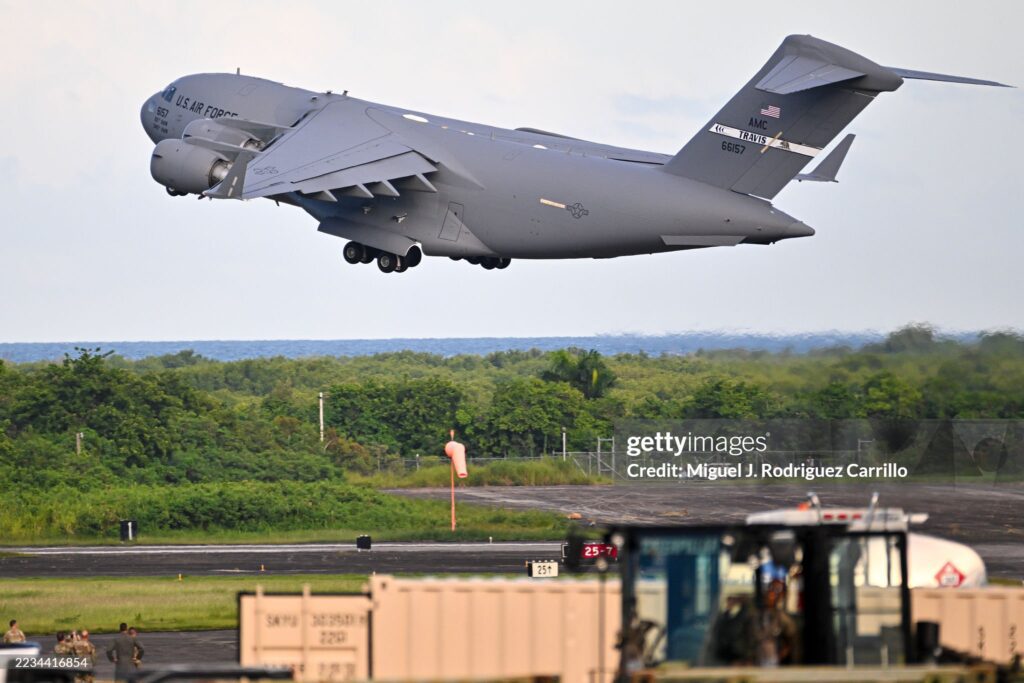
Prime Minister Philip J. Pierre confirmed Monday that the government of St. Lucia is actively investigating reports suggesting at least two of its citizens may have died in the strike, which was carried out by the United States Southern Command, (SOUTHCOM), as part of ongoing counter-narcotics operations.
“Let me assure the nation: the Government of St. Lucia is actively engaging through established diplomatic and security channels to verify the facts,” Pierre said in a statement. “We will communicate confirmed information to the public promptly and responsibly.”
The strike, conducted last week, targeted a vessel identified by U.S. officials as operating along known narcotics trafficking routes in the Caribbean Sea. According to SOUTHCOM, three individuals described as “narco-terrorists” were killed when a missile strike destroyed the vessel. No U.S. personnel were harmed.
However, regional reports and local sources suggest that three St. Lucian nationals who had departed by sea days earlier have not returned, raising fears they may have been among those killed.
Photographs published by regional media showing remnants of the destroyed vessel surfaced near Canouan in neighboring St. Vincent and the Grenadines, intensifying uncertainty about the exact location of the strike and whether it occurred in international waters or closer to sovereign territorial zones.
The uncertainty has triggered broader concern across Caribbean governments and citizens about the growing reach of U.S. military operations in the region — and the implications for Caribbean sovereignty.
Since September last year, the United States has carried out at least 36 similar strikes in Caribbean and Eastern Pacific waters, killing more than 120 individuals suspected of involvement in drug trafficking, according to U.S. military data.
Washington has defended the operations as part of an intensified effort to disrupt narcotics supply chains feeding the U.S. drug crisis. But human rights advocates and legal experts have increasingly questioned the legality of lethal military strikes conducted without public judicial process or transparent multinational oversight.
“This raises serious questions about jurisdiction, accountability, and the balance between security and sovereignty,” said a regional security analyst familiar with Caribbean maritime law. “Even when targeting criminal networks, military action in shared or adjacent waters has diplomatic and legal consequences.”
The situation is particularly sensitive in the Caribbean, where small island states depend on international cooperation for security but also guard their sovereignty carefully.
Prime Minister Pierre emphasized that his government’s priority remains obtaining verified information and protecting national interests.
“In matters affecting national security and regional stability, speculation has no place,” Pierre said. “Our approach is disciplined, fact-based, and guided by the singular priority of protecting the people and interests of St. Lucia.”
The incident follows similar controversy last year when families of Trinidad and Tobago nationals killed in a U.S. strike filed legal action in U.S. federal court, alleging unlawful killings.
The latest developments come amid broader geopolitical shifts in the Caribbean, where the United States has expanded its military and security footprint under the banner of counter-narcotics and regional stability.
For Caribbean nations, the events highlight a complex reality: balancing cooperation with global powers while safeguarding national sovereignty, legal accountability, and public trust.
As investigations continue, the outcome could have lasting implications not only for St. Lucia but for the Caribbean’s role in an increasingly militarized geopolitical landscape.
One central question now remains unresolved: in an era of expanded military operations in the Caribbean, how can small nations ensure that security cooperation does not come at the expense of sovereignty, transparency, and the protection of their citizens?