




By NAN Staff Writer
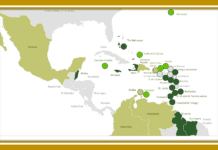
News Americas, NEW YORK, NY, Fri. Jan. 29, 2016: The mosquito-virus Zika continues to spread across the Americas – Latin America and the Caribbean. Arrival of the virus in some countries of the Americas, notably Brazil, has been associated with a steep increase in the birth of babies with abnormally small heads and in cases of Guillain-Barré syndrome, a poorly understood condition in which the immune system attacks the nervous system, sometimes resulting in paralysis. Here is a breakdown of the number of the current cases across this region:
BRAZIL: Officials said Wednesday they’ve found 4,180 suspected cases since late October, though only 270 of those so far have been confirmed.
COLOMBIA: Over 16,419 people are confirmed or suspected to have been infected by Zika, 1090 of whom are pregnant women. Of the total, only 798 have been confirmed by blood tests.
VENEZUELA: Non-governmental organizations say that the country saw more than 400,000 unusual cases of acute fever in the second half of 2015 that may have been Zika.
BARBADOS – The Ministry of Health is awaiting the results of 27 blood samples that were sent to the Trinidad based Caribbean Public Health Agency (CARPHA) to be tested for the Zika virus.
PUERTO RICO – at least 19 laboratory-confirmed cases for Zika have been confirmed.
THE DOMINICAN REPUBLIC – at least 10 cases confirmed according to the World Health Organization.
HAITI – 125 cases.
THE U.S. VIRGIN ISLANDS – at least one.
FRENCH GUIANA – 15 cases confirmed.
MARTINIQUE – 47 cases reported.
ECUADOR: 33 reported Zika cases, 17 of them confirmed by laboratory tests.
BOLIVIA: Four confirmed cases of Zika.
EL SALVADOR: 2,474 suspected cases of Zika, 122 of which were pregnant women.
HONDURAS: At least 1,000 cases reported since mid-December.
GUATEMALA: 68 confirmed cases of Zika.
MEXICO: 18 confirmed cases of Zika.
PANAMA: 42 cases of Zika, including one pregnant woman.
COSTA RICA: One case.
NICARAGUA: Two cases.
SURINAME: No official numbers released but John Codgrinton, the head of the Academisch Ziekenhuis Paramaribo (AZP) lab who first confirmed that the Zika virus had surfaced in Suriname, estimates that there are now thousands of infected people locally.
ST. MARTIN – One case.
What can travelers do to prevent Zika?
Zika, also known as ZIKV, is spread by the Aedes genus of mosquito, in particular the Aedes aegypti. There is no vaccine to prevent or medicine to treat Zika. Travelers can protect themselves by preventing mosquito bites, covering exposed skin by wearing long-sleeved shirts and long pants and using EPA-registered insect repellents containing DEET, picaridin, oil of lemon eucalyptus (OLE), or IR3535, and stay and sleep in screened-in or air-conditioned rooms says the Centers for Disease Control.
Pregnant and breastfeeding women can use all EPA-registered insect repellents, including DEET, according to the product label. Most repellents, including DEET, can be used on children aged 2 months.
If you feel sick and think you may have Zika:
- Talk to your doctor or nurse if you develop a fever with a rash, joint pain, or red eyes. Tell him or her about your travel.
- Take medicine, such as acetaminophen or paracetamol, to relieve fever and pain. Do not take aspirin, products containing aspirin, or other nonsteroidal anti-inflammatory drugs such as ibuprofen.
- Get lots of rest and drink plenty of liquids.
- Prevent additional mosquito bites to avoid spreading the disease.
Symptoms of Zika:
The symptoms of Zika virus are similar to other mosquito-borne infections such as dengue, chikungunya and malaria so laboratory testing is essential for the correct diagnosis. Zika virus is generally mild and self-limiting, lasting 2 to 7 days. Symptoms include:
- Fever
- Joint Pain
- Itching
- Rash
- Conjunctivitis Or Red Eyes
- Headache
- Muscle Pain
- Eye Pain
- Pregnant women can pass on the virus to their unborn children and this can lead to serious fetal brain development defects.
Zika Origin
The Zika virus was detected for the first time in a monkey in Uganda in 1947. A year later, it was isolated in an Aedes mosquito from the same region.
The first human cases appeared in the 1970s in Africa (Uganda, Tanzania, Egypt, Central African Republic, Sierra Leone, Gabon and Senegal) and then in some countries in Asia (India, Malaysia, the Philippines, Thailand, Vietnam and Indonesia).
In 2007, an actual epidemic broke out in Micronesia (Yap Islands in the Pacific Ocean), causing 5,000 infections.
In 2013 and 2014, 55,000 cases of Zika were reported in French Polynesia. The epidemic then spread to other islands in the Pacific, namely New Caledonia, the Cook Islands and Easter Island.
The Zika virus was detected for the first time in the northwest of Brazil in May 2015 and it quickly spread to other regions of the country. Brazil has declared the highest number of Zika cases ever recorded with between 440,000 and 1,300,000 suspected cases reported.