
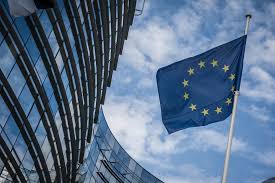
News Americas, LONDON, England, Weds. Sept. 17, 2014: On September 10th the incoming President of the European Commission (EC), Jean Claude Junker, named seven Vice Presidents and 20 Commissioners who will jointly control the European Commission for the next five years, assuming they are confirmed in November by the European Parliament.
The process by which the names emerge is perhaps best described as byzantine. It involves EU Governments putting forward candidates and then horse trading to achieve the position that might best suit their relative economic and political weight and the interests of each country. The consequence is that it is unclear until the last moment which candidates and nations will obtain the most influential posts.
What is also unusual about the process is that those whose names are put forward are of mixed ability; some are very senior politicians, while others are little known even in their own countries, but all go to Brussels to try to protect the interests of their national governments.
In a break with the past, and in an attempt to give balance to economic decision making in a Europe divided over economic, financial and monetary policy, the EC President, who is also new, controversially appointed an upper layer of seven Vice Presidents who will decide what proposals the Commissioners can add to the Commission’s agenda. He also chose a powerful First Vice-President, Frans Timmermans, the Dutch Foreign Minister, in an attempt to make more effective a commission which has become increasingly unwieldy.
Although the theory now is that the Commissioners will enact policy, coordinated by the new Vice Presidents who will not have any direct control over the executive authority of individual directorates, many Brussels experts consider this new approach to have introduced a fourth dimension into the EC’s already complex power play between the Commission, the member states and the Parliament.
Under the European system and by way of background, the Commissioners are the individuals who in a quasi-ministerial way have executive power to direct the Brussels bureaucracy and under whose guidance officials develop regulations, policy initiatives and budgets. These are then put forward for agreement to EU Member states through the Council of Ministers and eventually to the European Parliament which now has much increased powers over the content of most legislation and regulation.
Despite the enormous power that the Commissioners’ role confers, they are little known in the Caribbean and scarcely ever visit, with perhaps the only widely recognisable figure being the 2004 to 2008 Trade Commissioner, Peter Mandelson, from the UK, who forced the Economic Partnership Agreement (EPA) on the Caribbean by a mix of threats and inducements.
Despite this, the Vice Presidents, Commissioners and the High Representative for Foreign Affairs sitting in Europe’s 20 Directorates matter, as these are the individuals that set European policy affecting foreign relations, development, the environment, financial relations, agriculture, transport, energy and all else that is not within the competence of individual EU states.
Although this may seem remote from the Caribbean their role touches the region in many ways.
At its most obvious, the High Representative for Foreign Affairs is effectively the EU’s Foreign Minister and is engaged on a world stage representing Europe. This means the representative is quite literally at most major international meetings at which the Caribbean’s interests are touched upon. More specifically and by way of example, the outgoing representative, Catherine Ashton – who had little time or enthusiasm for the Anglophone Caribbean – is the politician who initiated the negotiations now underway with Cuba for a first generation political dialogue and co-operation agreement that should lead to a much deeper relationship with Europe. She will be replaced by Federica Mogherini, the present Italian Foreign Minister.
But there are also others of importance to the Caribbean ranging from the new Trade Commissioner, Cecelia Malström from Sweden, who will conclude the Transatlantic Trade and Investment Partnership Agreement (TTIP) which will liberalise trade in services and much more between the EU and the US; the new Agriculture Commissioner, Phil Hogan from Ireland, who will see through the effective end of any special relationship on sugar with the ACP Group under the Common Agricultural Policy; and the Development Commissioner, Neven Mimica from Croatia ,who will oversee the already agreed redirection of EU aid away from relatively wealthy regions like the Caribbean towards regional projects, sectors like security and the environment, and the world’s poorest nations like Haiti. There will also be Jonathan Hill from Britain, who as Financial Services Commissioner will, amongst other matters, be responsible for financial services regulation in ways that touch Caribbean overseas financial centres, and Corina Cretu from Romania who in part will be in charge of Europe’s policy approach towards France’s departements d’outre mer (DOM) in the Caribbean.
For the Caribbean these names will mean almost nothing. They also point to the way in which the region has let drift its relationship with Europe, has almost totally ignored the newer member states, some of which like Poland are becoming increasingly influential, and has all but lost in European capitals any kind of collective memory or sympathy for the region’s past relationship with Europe. To make matters worse, the UK position within Europe is now so weak as a result of its equivocations about engagement, that it has much less ability to obtain support for Caribbean interests even if it were so minded.
While the news of the appointments of a group of new European Commissioners is hardly going to set the world on fire, it is worth asking who if anyone in the Caribbean’s many foreign ministries any longer has the energy to understand or engage with a Europe of increasing complexity and a less than common history.
Many of the new commissioners were born well after the region went to independence. This means that, despite the best efforts of Caribbean Ambassadors in Brussels, the absence of Ministerial visits or any personal relationship with the governments from which the new commissioners have come, it will become harder, for the Anglophone Caribbean in particular, to claim there is a basis for a special relationship with Europe.