



News Americas, NEW YORK, NY, Sat. Feb. 28, 2026: As efforts to distort or diminish Black History Month in the United States grow, it is more important than ever to state plainly: history is what it is, not what some wish it to be.
A vital part of America’s story arrived from beyond its shores. The blood of Caribbean people runs as far back as the 1660s in what became the United States, when they were forcibly brought here as enslaved Africans. According to Jennifer Faith Gray of the Scottish Centre for Global History, Barbados served as the principal hub for the transshipment of enslaved persons to the British North American colonies of Virginia, Carolina, Pennsylvania, New Jersey, and Connecticut.
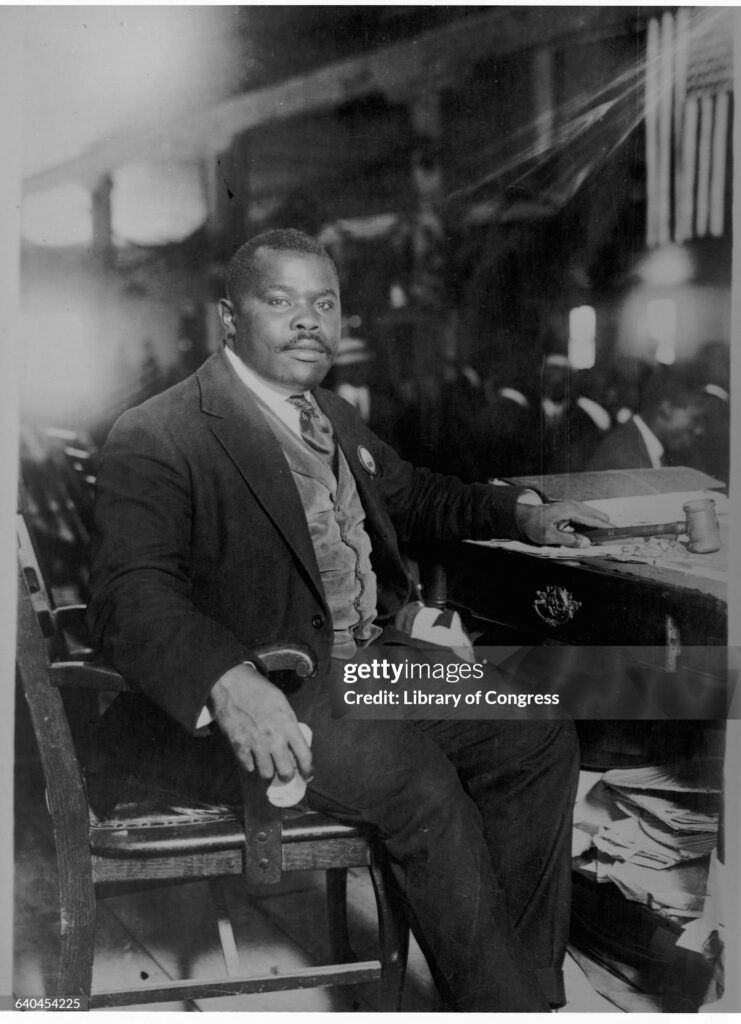
Between 1660 and 1730, Barbadian merchants transshipped 2,503 enslaved Africans to Virginia alone. From 1660 to 1739, more than 2,000 enslaved people were shipped to New York from Jamaica on 197 voyages. Between 1701 and 1726, some 1,570 enslaved Africans were officially imported from the West Indies. During the Dutch period in New York, 70 percent of enslaved Africans came from the Caribbean. Banks, insurance firms such as Aetna, JP Morgan Chase, and New York Life, and prominent law offices profited from these transactions.
Caribbean presence in America is not recent. It is foundational.
The Haitian Revolution further reshaped early Black America, bringing thousands of Caribbean-born migrants to cities like New Orleans and New York, where they helped form early free Black communities.
Among notable early Caribbean immigrants was Haitian-born Jeremiah G. Hamilton, known as “Jerry” Hamilton, who became the only Black millionaire in New York roughly a decade before the Civil War. Jamaican immigrant John Russwurm co-founded the first Black newspaper in the United States in 1827 in New York City. St. Croix-born Hubert Henry Harrison was described by activist A. Philip Randolph as “the father of Harlem radicalism.”
Caribbean immigrants were not merely laborers; they were institution builders. Solomon Riley, a Barbados-born real estate magnate, acquired and managed Harlem property at a time when Black ownership itself was a form of resistance. Barbados-born Richard Benjamin Moore founded the Frederick Douglass Book Center in Harlem. Puerto Rican-born Arturo Schomburg preserved Black historical archives that remain foundational to understanding Black identity. Jamaican writer Claude McKay helped define the Harlem Renaissance, giving voice to a new generation of Black intellectual and cultural expression.
At the same time, thousands of Caribbean immigrants entered essential professions that became the backbone of Black middle-class stability. Caribbean women, particularly from Barbados and Jamaica, became nurses and healthcare workers in New York hospitals. Caribbean men secured employment in civil service, transit, and public-sector jobs that provided steady income and security. These roles enabled homeownership, education, and upward mobility.
Their children would go on to expand Black professional life in America. They include Shirley Chisholm, daughter of Barbadian immigrants and the first Black woman elected to Congress; Nation of Islam leader Louis Farrakhan Sr., born to Jamaican and Saint Kitts immigrant parents; Harry Belafonte, born in Harlem to Jamaican immigrants; and Colin Powell, the son of Jamaican immigrants who rose to become Chairman of the Joint Chiefs of Staff and U.S. Secretary of State.
These figures were not outsiders to Black American progress. They were central to it.
Caribbean immigrants helped establish economic stability in neighborhoods, build businesses, preserve cultural identity, and strengthen institutions. They laid foundations that allowed Black middle-class life to grow despite systemic barriers.
And they are still doing so today.
Caribbean immigrants and their descendants continue to serve as healthcare professionals, educators, entrepreneurs, and public servants across the United States. They continue to buy homes, build businesses, and raise families, committed to advancement and stability. Their contributions remain deeply embedded in the nation’s economic and social fabric.
At a time when immigrants are portrayed as burdens rather than builders, this history offers a necessary perspective.
Caribbean immigrants did not weaken America. They strengthened it. They did not arrive empty-handed. They brought knowledge, discipline, ambition, and determination.
And they are still building it today – even in a climate that questions their belonging.
Felicia J. Persaud is the founder and publisher of NewsAmericasNow.com, the only daily syndicated newswire and digital platform dedicated exclusively to Caribbean Diaspora and Black immigrant news across the Americas.