



News Americas, WASHINGTON, D.C., Fri. Jan. 6, 2017: The debate over the efficacy of the citizenship by investment programs in a number of Eastern Caribbean countries has caught fire over the January 1, 2017 CBS 60 Minutes program drawing attention to a number of deficiencies in these programs. This debate is not new but has taken on new dimensions when critics of these programs are being accused of treason and in some cases likened unto terrorists.
A number of countries in the Eastern Caribbean now have Citizenship by Investment Programs (CIPs or CBI programs) designed to attract foreign investments and foreign exchange into their respective economies. From time to time issues are raised on a number of fronts. The most important question raised about these CIPs is whether countries of the Eastern Caribbean have the requisite capacity in law, administration, and operation to appropriately and effectively vet applicants to their programs. They say they do, but the record seems to suggest otherwise.
Let me state unequivocally: No country that has an investment program that grants permanent residency or citizenship through investment can totally eliminate abuse of the program. Individuals, who may have ulterior motives driving their desires for new nationalities, will in all likelihood have access to sophisticated means to disguise who they represent themselves to be. They generally have access to international criminal networks or sufficient wealth to purchase new identities even before they apply for a new nationality. It is quite easy in many countries around the world for criminals to establish shadow companies in order to deceive law enforcement. It is extremely difficult, and sometimes impossible, to vet such individuals properly, especially when such period of vetting – from application to grant of citizenship – is as little as three months.
For these and other reasons, I have been a critic of these programs. I recall that, during my years as an Expert Adviser to the UN Security Council Counterterrorism Committee (CTC), a number of these CIP programs were cause for concern. At the end of the Cold War, a significant number of Russians, often described as Russian mafia, actively sought to acquire nationalities other than their own. I had conversations with a Caribbean diplomat of one of the Eastern Caribbean islands conveying during these conversations the concerns of the CTC that terrorists could abuse that country’s citizenship by investment program to gain access to a targeted country where they could carry out acts of terrorism. It is not uncommon or unlikely for international terrorists and criminals to seek ways in which to travel from one country to another without detection.
Criminals and terrorists will always use the most accommodating methods to achieve their nefarious objectives. Similarly, money launderers are apt to take advantage of available nationalities in countries that may offer them access to banking systems that may be considered less than transparent according to international banking standards. For all these reasons I have enumerated, there are justifications to question the efficacy of citizenship by investment programs. The least capacitated the program, the more likelihood of abuse.
It is therefore not unlikely for questions to be raised about the programs of Eastern Caribbean countries. This is especially so when the vetting period is short and governments fail to demonstrate a high level of technological capacity and intelligence gathering mechanisms when compared to generally acceptable international standards.
This brings me back to where I started – with reference to the debates taking place in Dominica, Antigua and Barbuda, and elsewhere in the Eastern Caribbean. The accusations in the wake of the CBS 60 Minutes program have descended to troubling levels. It is now quite possible that some of the accusations against critics of the programs could trigger violence against those individuals. The tenor of the debate in Dominica, in particular, is cause for great concern.
Specifically troubling are accusations of treason leveled against certain critics and political opponents of governments in the region, also referring to these critics as terrorists. Such characterizations of free speech are anathema to civilized discourse. These are serious charges which should not go unchallenged. As an individual who loves the Caribbean and unabashedly support Caribbean integration I am compelled to condemn such reckless rhetoric and use whatever media available to me to do so without reservation.
It is absurd for anyone who has exercised freedom of speech in a democratic society by openly expressing criticism, or giving an opinion about a government program he or she opposes, that such expression would under any circumstance be considered treasonous. Or for that matter such an individual to be considered as a traitor. A truly democratic society should be open to all forms of criticism by its citizens. The government has an obligation to protect that right to free speech otherwise it is the government that is betraying its people and undermining the very democracy it purports to protect.
In order to understand the nature of the charge of “treason” I turned to Black’s Law Dictionary, an authority on legal definitions of the Terms and Phrases of American and English Jurisprudence which defines Treason as: “A breach of allegiance to one’s government, usually committed through levying war against such government or by giving aid and comfort to the enemy. The offense of attempting by overt acts to overthrow the government of the state to which the offender owes allegiance; or betraying the state into the hands of a foreign power.”
The definition goes on to specify that, “Treason consists of two elements: adherence to the enemy, and rendering him aid and comfort.” Adherence to the enemy means that an individual has joined the enemy of the state, giving loyalty to the enemy; or intentionally acting in a direct way to further hostile (military) actions by the enemy against the state. Exercising one’s right to criticize government cannot under any circumstance be characterized in this manner. Anyone who accuses another of treason or of being a traitor outside of the definition I have offered defames such an individual.
This brings me to the use of the words “terrorist” and terrorism” often used loosely and frequently, out of context, without regard for the meaning of the words, or the stigma it attaches to individuals so described.
Individuals and government officials, and agents of governments, are way over the line when resorting to such characterization of fellow citizens with whom they have a disagreement. It is even more troubling when used by leaders of government and members of the legal profession who should by their words and actions be defenders of the rule of law and not resort to character assassination or mob rule.
Setting the tone for violent reprisal against political opponents and critics, or creating an environment where such individuals feel their lives are threatened, has no place in a democratic society. Such wanton disregard for civility has no place in Caribbean political discourse.
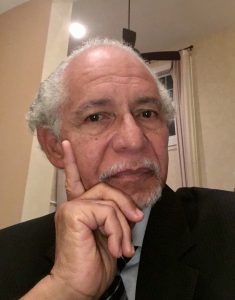 EDITOR’S NOTE: Ambassador Curtis A. Ward, B.A., J.D., LL.M., is an attorney and international consultant, and Adjunct Professor in the Homeland Security Graduate Program at the University of the District of Columbia. As former Ambassador of Jamaica to the United Nations he served two years on the U.N. Security Council. He was Expert Adviser to the UN Counter-Terrorism Committee for three years. He specializes in terrorism/counterterrorism legal and policy frameworks; anti-money laundering and countering financing of terrorism (AML/CFT); sanctions implementation; crime and security; human rights, rule of law and governance. This article was reprinted with permission from The Ward Post.