



By NAN Business Editor
News Americas, NEW YORK, NY, Fri. July 8, 2016: A major banking crisis is facing the Caribbean region and the issue made its way to the top of the agenda of leaders of 15 Caribbean Community (CARICOM) who gathered in Georgetown, Guyana from July 4-6th for the 37th Regular Meeting. Here are five things you should know about the issue of de-risking:
1: The genesis of this issue lies in the signal by several international banks, mainly in the US and Europe, to client banks in the region of an unwillingness to continue carrying their business, as part of a so-titled “de-risking” strategy. This is because the Caribbean has been labeled as a tax haven and accused of lax tax regimes and avenues for money laundering and terrorism financing, despite no evidence to prove this. Many correspondent banks claim they have weighed the marginal profits earned from doing business against the potential large fines and penalties due to lack of compliance as well as the reputational damage that could result and deemed it too much of a risk to continue to pursue business in these jurisdictions. US perceptions of banks in the Caribbean have also been heavily influenced by comments from both Congress and the State Department, which have only served to compound the negative view of banks in Cayman, among their correspondents.
2: CARICOM, and indeed the Caribbean as a whole, is concerned because if all correspondent banking relations are withdrawn, the region will be isolated from the rest of the world and will be unable to carry out some of the most basic of bank transaction including remittance transfers, international trade, and the facilitation of credit card settlements for local clients, among other services. Last year, the World Bank, in a survey, said “the Caribbean seems to be the region most severely affected” but the de-risking phenomenon has already affected countries in Asia, Africa and Latin America in a major way, and more terminations of correspondent accounts and loss of banking services can be expected worldwide.
3: In Jamaica, where remittances are a major source of foreign exchange, the number of money transfer businesses and foreign exchange traders has declined as a result of the severance of correspondent banking relationships; Guyana and the countries of the Eastern Caribbean Currency Union have experienced terminations; and business has slowed in the International Business and Financial Services sectors in the Cayman Islands, The Bahamas and Barbados. Eight correspondent banking relationships in Barbados’ IBFS sector have been severed, and although several of these businesses have been able to establish relationships with other financial institutions, others have not. And Belize has experienced terminations in correspondent bank relationships that account for more than half of their banking assets. Belize’s central bank has sought to provide assistance, but some customers in that country still have no access to their funds.
4: Heads of governments of CARICOM nations deem the action by the correspondent banks, “as an economic assault” tantamount to an economic blockade against member states and insist that they have complied with all global regulatory standards, including those established by the Financial Action Task Force (FATF) and the Global Forum, and have been scrutinized in every detail by the IMF and other multilateral institutions.”
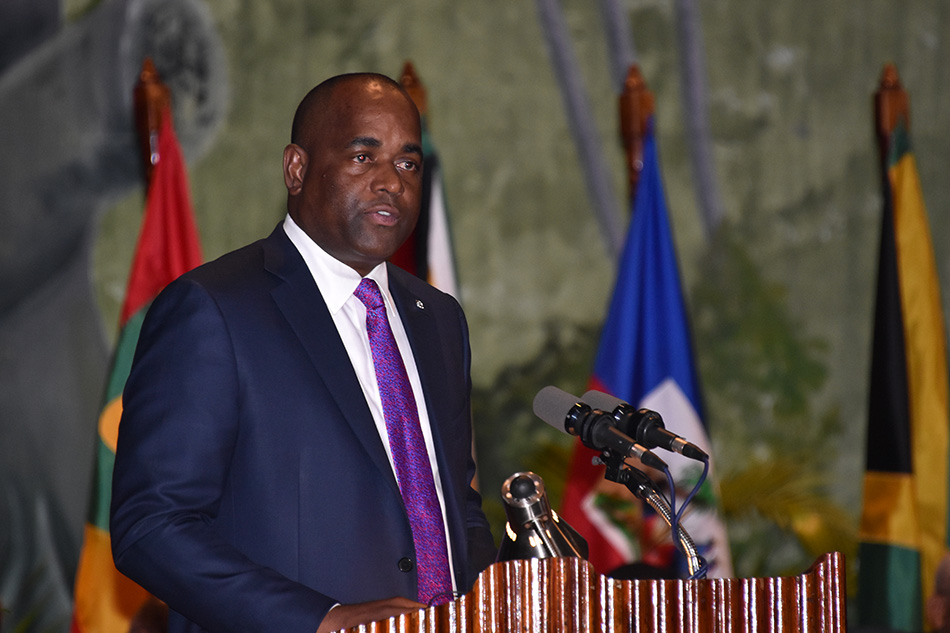
5: CARICOM is, however, fighting back by appointing a high level advocacy group, led by the Prime Minister of Antigua and Barbuda, Gastown Browne, to represent the interests of the region on the issue, to the UN, the WTO and the US Government including the Congress.