




News Americas, MIAMI, FL, Thurs. March 12, 2026: Nearly five years after Haiti’s President Jovenel Moïse was assassinated in his bedroom, his widow has returned to court to recount the terrifying night that plunged the Caribbean nation into deeper turmoil.
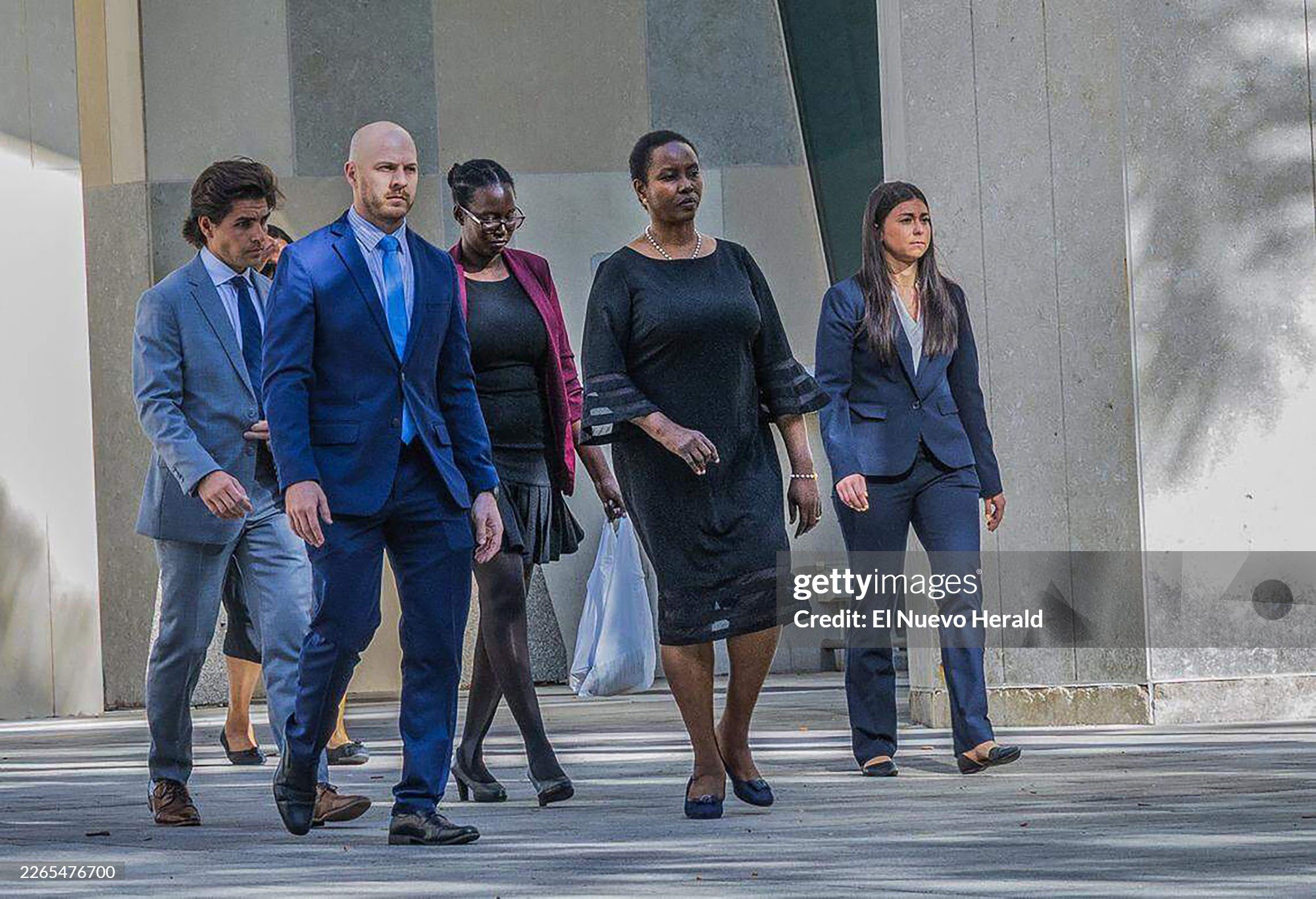
Martine Moïse, the former first lady of Haiti, testified this week in a U.S. federal courtroom in Miami in the trial of four men accused of conspiring to kidnap or kill her husband in July 2021. Speaking through a Creole interpreter, Moïse described the early morning hours when gunmen stormed their home near Port-au-Prince.
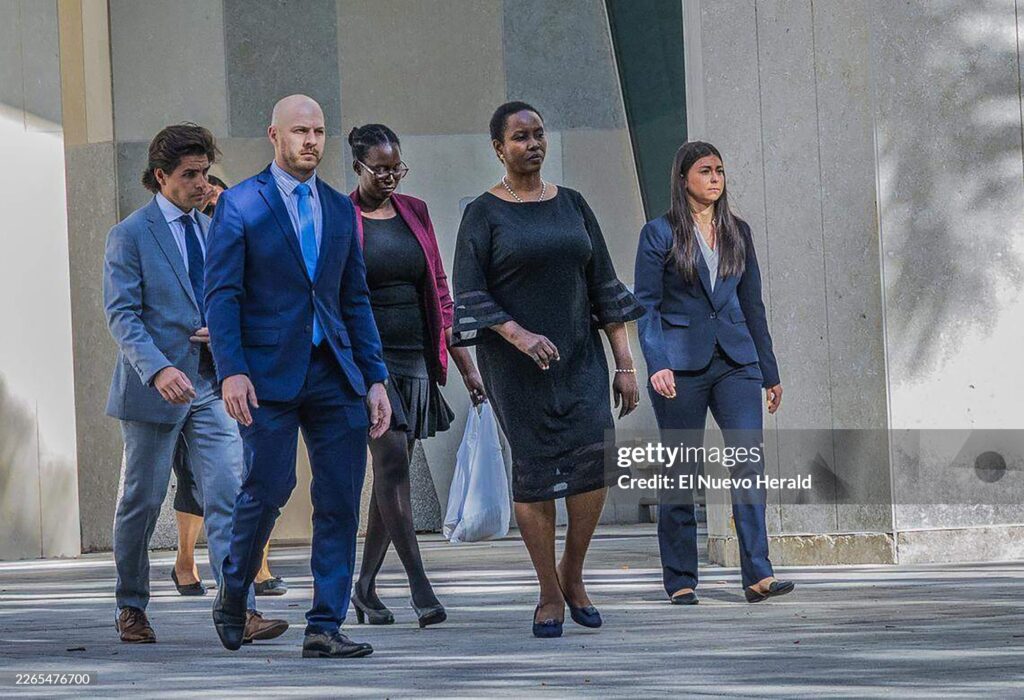
She said she had gone to bed around 10 p.m. on July 6, 2021, but awoke around 1 a.m. to the sound of gunfire. “I looked in his eyes,” she told the court. “He was in shock.”
When she asked her husband what was happening, President Moïse replied: “Honey, we are dead.”
According to prosecutors, about two dozen foreign mercenaries – most of them former Colombian soldiers – attacked the presidential residence that night. The heavily armed group broke into the bedroom shortly before 2 a.m., firing what Moïse described as automatic weapons.
Moïse testified that she and her husband tried to shield themselves by lying on the floor on opposite sides of their bed. But moments later, the attackers burst into the room.
She said she heard the men speaking Spanish before gunfire erupted. She was struck several times and severely wounded. Her husband was shot multiple times at close range and killed.
Moïse told the court that after the attackers fled, she expected to find the bodies of the security officers assigned to guard the residence.
Instead, she found none. She later learned, she said, that some security personnel had been paid to abandon their posts before the attack.
Moïse was initially taken to a nearby hospital before being flown to Miami for emergency surgery. She testified that her right arm remains disabled from the injuries and that she continues to experience pain.
Her testimony marks the first time she has publicly described the assassination in detail since the attack. During the emotional testimony, Moïse apologized to her late husband as she struggled to contain her tears.
“Please forgive me,” she said. “I promised Jo I would never cry again.”
The trial centers on four defendants accused of conspiring to overthrow the Haitian president and replace him with a preferred leader. They include Arcangel Pretel Ortiz, Antonio Intriago, Walter Veintemilla and James Solages. Prosecutors allege that the conspiracy was planned and financed in South Florida.
Ortiz and Intriago were principals of a Miami-area security firm called Counter Terrorist Unit Federal Academy, or CTU. Veintemilla was associated with Worldwide Capital Lending Group, while Solages served as a CTU representative in Haiti.
According to prosecutors, the group initially supported Haitian-American pastor Christian Sanon as a possible replacement for Moïse.
The defendants have pleaded not guilty. Prosecutors argue the conspirators were motivated by “greed, arrogance and power,” believing they could overthrow Haiti’s government and benefit from lucrative contracts under a new administration.
Defense attorneys, however, say their clients were misled and believed they were participating in a legitimate plan to arrest the president. They have argued that the investigation into Moïse’s assassination has been chaotic and politically manipulated, suggesting that shadowy figures within Haiti orchestrated the killing.
The assassination of Moïse triggered a political and security crisis in Haiti that continues today. Since his death, the country has faced worsening gang violence, political instability and a stalled justice system. Seventeen former Colombian soldiers and several Haitian officials have been charged in Haiti, but proceedings there have been hampered by violence, death threats and the collapse of the country’s judicial system.
In the United States, five individuals have already pleaded guilty to conspiracy charges and are serving life sentences. Another person was sentenced to nine years in prison for supplying body armor to the conspirators.
The trial in Miami is expected to last several weeks.
For many Haitians, the proceedings represent one of the few remaining opportunities to uncover the truth behind an assassination that shocked the world and altered the course of the nation’s history.