




By Ron Cheong
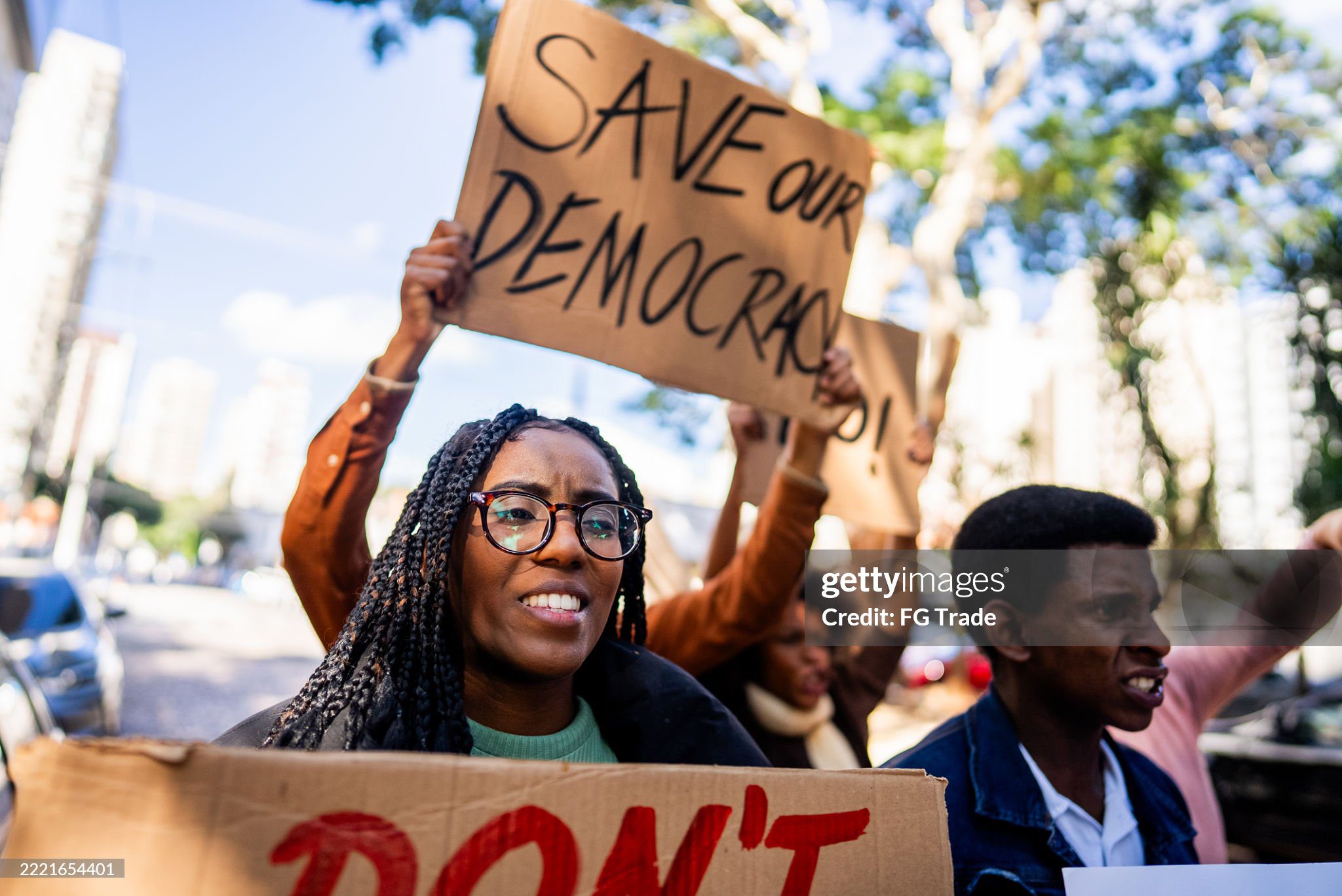
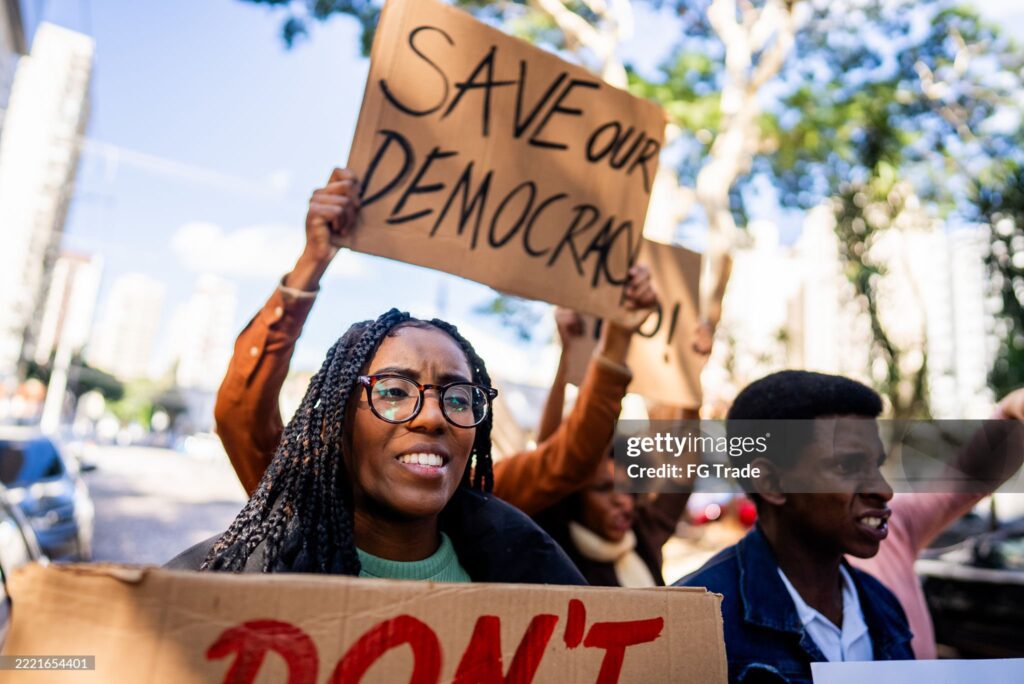
News Americas, TORONTO, Canada, Weds. Jan. 14, 2026: The eye of the inclement local turbulent weather seems to have largely run it course and is sputtering and grasping at straws now. And so this is a good time to revisit some ancient wisdom which describes what we have seen, the reasons underlying it and age old frailties that foster it. Democracy is built on freedom, equality and collective decision-making – yet again and again it often elevates leaders who are unprepared, incompetent, or dangerously unfit for governance.
This is not a new paradox. More than 2,400 years ago, Plato warned that democracy contains the seeds of its own decay, not because people are evil, but because human desire, left undisciplined, overwhelms judgment. What feels like a uniquely modern crisis – celebrity leaders, emotional politics, social-media outrage, and the triumph of confidence over competence – is in fact the fulfillment of a pattern Plato described with unsettling precision.
How Democracy Decays From Within
In ‘The Republic,’ Plato outlines democracy’s lifecycle. It begins nobly, animated by a passion for freedom and equality. Over time, however, freedom becomes excess. Restraint is dismissed as oppression, expertise as elitism, and discipline as weakness.
Citizens increasingly value pleasure, impulse, and self-expression over responsibility and wisdom. In such a climate, the distinction between qualified leadership and theatrical confidence erodes. The masses, Plato argued, come to prefer those who entertain them, flatter their desires, and promise immediate gratification over those who understand the complexities of governance.
This is not corruption imposed from above; it is decay generated from within. When citizens lose their internal discipline – the ability to delay gratification, tolerate complexity, and submit to reasoned authority- democracy becomes vulnerable to manipulation. Politics turns emotional. Serious debate gives way to spectacle. Popularity replaces competence.
The Rise Of The Demagogue
Plato warned that democratic excess naturally gives rise to the demagogue: a figure who presents himself as the pure embodiment of the people’s will. He attacks institutions, experts, and rivals as enemies of “the people,” while offering simplistic solutions to complex problems. He promises everything and demands nothing – except loyalty.
The contemporary parallels are hard to ignore. In Guyana, where the self-promoted richest man in the country, openly lacking any knowledge of governance, captured 16 of the Official Opposition’s 29 seats in the last election by projecting confidence and making promises untethered from reality. His appeal was not policy or competence, but certainty – certainty that reflected his followers’ desires back to them.
In this case fortunately, wealth was not the Teflon coating he used it would be. He overestimated his pull on voters – other realities and hard facts stepped in and pre-empted what Plato’s saw as the aspiring demagogue’s ultimate and most dangerous stage: when the demagogue convinces his followers that he alone can solve their problems.
Chaos As A Political Strategy
Plato’s insight goes further. The demagogue, he argued, does not reduce chaos – he intensifies it. Disorder becomes a tool. Constant crisis exhausts the public, erodes attention, and weakens the capacity for independent judgment. Over time, citizens become overwhelmed by complexity and contradiction. Freedom, once cherished, begins to feel like a burden.
It is at this point – when the electorate is emotionally drained and intellectually fatigued – that democracy quietly surrenders itself. The people do not lose their freedom by force; they give it away. They trade deliberation for devotion, criticism for loyalty, and shared responsibility for the comforting belief that someone else will carry the weight of decision-making.
Plato warned that once this transition occurs, followers become incapable of separating themselves from the leader, regardless of what he does. His failures are reinterpreted as virtues. His abuses become necessary evils. Opposition is no longer disagreement but betrayal.
Why the Crowd Clings
This is the most uncomfortable part of Plato’s argument: societies fail not simply because of bad leaders, but because citizens lose the internal discipline required for self-government. An electorate can be “uneducated” not in the formal sense, but in the deeper sense of being unwilling to think, question, and restrain its own desires. Leaders who promise instant solutions flourish precisely because they absolve followers of responsibility.
When people surrender judgment, they also surrender agency. At that stage, abandoning the leader would require confronting their own role in the chaos – a step many find psychologically unbearable. It becomes easier to cling than to reflect.
An Ancient Warning For A Digital Age
Social media, algorithmic amplification, and celebrity politics have not created this problem, but they have accelerated it. Emotional propaganda travels faster than reason. Popularity is measurable, instant, and monetized. Plato could not have imagined platforms or algorithms, but he understood human psychology well enough to predict the outcome: a politics optimized for desire rather than truth.
What truly holds a free society together, Plato believed, is not unlimited freedom but self-restraint-within individuals as much as within institutions. When that restraint erodes, democracy does not collapse in a dramatic coup. It dissolves quietly, willingly, and from within.
Plato’s warning feels uncomfortably modern because it is not about systems alone, but about we ourselves.
EDITOR’S NOTE: Ron Cheong, born in Guyana, is a community activist and dedicated volunteer with an extensive international background in banking. Now residing in Toronto, Canada, he is a fellow of the Institute of Canadian Bankers and holds a Bachelor of Science degree from the University of Toronto. His comments are his own and does not reflect those of News Americas or its parent company, ICN.