




News Americas, LONDON, England, Weds. July 13, 2016: Although an eerie calm may have settled on Europe now that the immediacy of the decision by the United Kingdom to leave the European Union (EU) has sunk in, it should not lull the Caribbean into a sense of false security or inaction.
It has arisen because much is now on hold until a new British Prime Minister is formally appointed in September; a future approach to the UK’s relationship with the EU27 is agreed; the relevant article of Europe’s Lisbon Treaty is invoked to leave; and Britain embarks, first on a two-year process of negotiation to leave, and then agrees some as yet uncertain new form of relationship.
Although few are prepared to say so, it is also likely that the process will be slow because both the EU27 and the UK will have to factor in the views of whoever is elected in November in the US Presidential race, as the two likely candidates have radically different visions of a future relationship with Europe.
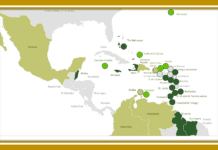
Among the pressing and uniquely difficult Caribbean issues that require early resolution is how Brexit will modify the largely beneficial relationship that the UK’s five Dependent Territories in the Caribbean – Anguilla, Montserrat, the Turks and Caicos Islands, the Cayman Islands, and the British Virgin Islands – have with both Britain and the EU.
Their concern was made clear a few weeks before the UK referendum in a special study* commissioned by all fourteen of the UK’s overseas territories around the world. It made clear that many of the benefits they receive from their relationship “will be placed at serious risk” if the UK decided to leave the EU.
The report observed that, while historically the most important relationship they have is with Britain, their ties with the EU have grown over the last fifteen years. This has not only enabled institutional links with the European Commission and other EU overseas territories, but also has provided direct access to EU policy makers and enabled greater political visibility.
The study also made clear the value of the support the OTs receive from the EU, including development assistance of at least €80m (US$89.5m) between 2014-2020, which is used to address a wide range of economic, environmental and other issues; free trade access to the EU market for goods and services; and time-limited free movement across the EU, enabling business and educational opportunities for their citizens.
However, as Dr Peter Clegg, a Senior Lecturer of Politics at the University of the West of England, Bristol, who was the report’s author and has previously written widely on Overseas Territories issues points out, this special relationship, has been cast into doubt by the UK’s vote to leave the EU.
“The situation is now very uncertain …. none of the parties involved in the Brexit negotiations know how or over what time frame they will happen; or what the outcome will be. As a result, it makes it very difficult for the UK OTs to plan their response,” he told me.
As a first response to the UK vote, overseas territories representatives have already undertaken informal discussions with the European Commission, and it is likely that a summit of OTs leaders may take place very soon. A second part of Dr Clegg’s report is expected shortly.
Notwithstanding, the range of issues that the region’s micro states will have to address are complex.
Since the UK funds about 15% of the European Development Fund (EDF), a first and urgent requirement will be to ensure that what has been agreed on funding for the OTs up to 2020 is secure and will continue to flow.
Before the vote, James Duddridge, the Minister in the UK Foreign and Commonwealth Office responsible for relations with the Caribbean, who supported leaving the EU, told the Cayman News Service that “an independent Britain can spend more time developing our historic ties rather than be shackled by the regulation and political infrastructure that is a federal union,” and that “OTs value the relationship with the UK more than the EU.” Despite this, it is far from clear how much bilateral funding will eventually be available for the overseas territories. This is because they are largely regarded in London as being too wealthy to merit such support.
Secondly, all of the UK’s Caribbean OTs will have to address the constitutional, legal and structural uncertainties that will arise, overcoming their often limited analytic and technical negotiating capacity.
Among the complex questions they will need to address is how in future they are to relate to the EU.
The logical vehicle would be through the existing intermediary body, the Overseas Countries and Territories Association, and while the UK may be willing to continue to cede sovereignty in this way, it is not certain that the French, Dutch or Danish, whose territories are also in the group, would agree.
Clarity will also be required on how the model the UK chooses for its future relationship with the EU will legally incorporate the UK OTs.
If the UK were to go for an EFTA plus or minus arrangement, similar to that between Norway or Switzerland and the EU, the OTs might be able find a way to piggy back on such an arrangement. Every other option would require the OTs to be involved in any negotiation between the UK and EU.
Fourthly, there is the view in some overseas territories that a changed UK relationship with Europe may offer an opportunity for the OTs to further develop their offshore financial services. The suggestion is that this could enable a less regulated relationship with the City of London and the UK, enabling the OTs to encourage greater inward investment into the UK and the OTs becoming more integrated with the UK. Others however observe that with the UK out of the EU it will now become impossible for the UK to block damaging financial services legislation.
The challenge now, as Dr Clegg observes, is for the UK overseas territories to act swiftly.
He believes that the absence of negotiating capacity in the UK offers an opening if the Territories are pro-active, remain unified, and work to influence the debate, not only in London and Brussels, but also in other European capitals.
“If the Territories can promote a positive and realistic agenda then they will have a good chance of securing some of their interests in the longer term, affirming their link with the EU, which they value highly,” he says.
* The United Kingdom Overseas Territories and the European Union: Benefits and Prospects.