




News Americas, LONDON, England, Tues. June 15, 2015: In North America and Europe, there are from time to time international conferences that quietly enable new thinking.
It is mostly an unseen process whereby governments, foundations or think tanks facilitate conversations, in ways that variously attempt to address intractable problems such as those in the Middle East, form a consensus on future policy, or enable the participants to look over the horizon.
These events allow invited participants to escape from their day to day responsibilities and usually in a group of 50 or less, debate and explore new ideas or solutions in private.
The value is not just in the dialogue and the outcome, but in the freedom to say what you think knowing that no one will quote you, in the personal contacts made in the margins, and the associated trust that develops which can last throughout a career.
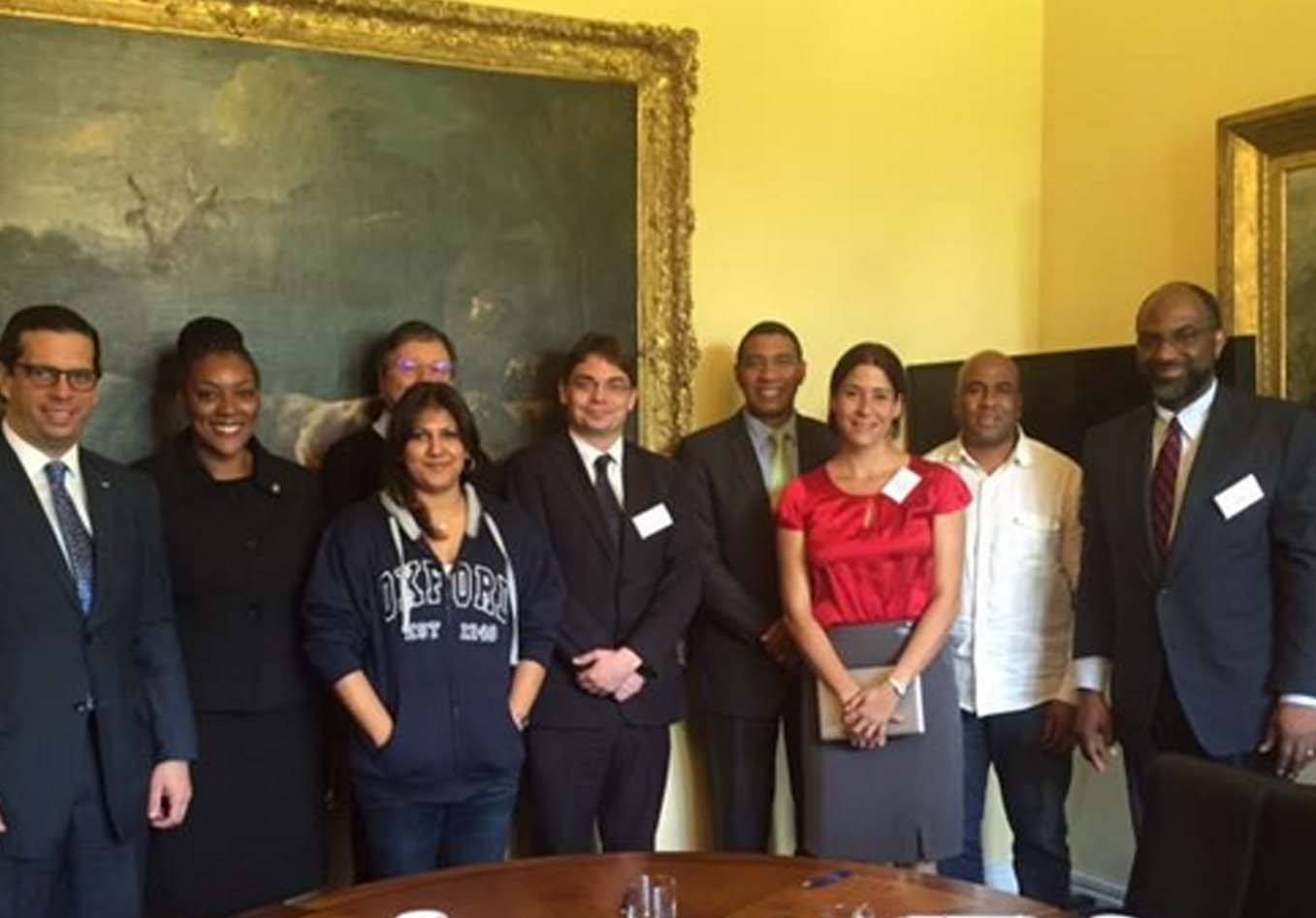
Such events rarely focus on the Caribbean, but a little over a week ago about 60 invited guests from the Caribbean as a whole, the UK and North America, met at Wilton Park in the English countryside.
The objective of ‘Caribbean 2030: New Thinking For A New Generation,’ was to bring together a mix of voices, young and more experienced, to consider what the region might look like fifteen years from now, and to hear in particular how younger participants from politics, government, the private sector, academia and civil society see the Caribbean’s future and how they might play a role in taking it there.
The conference, which was developed in conjunction with the Caribbean Policy Research Institute (CaPRI) and Britain’s Foreign and Commonwealth Office, was wide-ranging in its scope, but a number of general themes emerged which suggest a different Caribbean in fifteen years’ time.
One of the more significant discussions that ran throughout the conference was whether the future fortunes of the region lay in economic convergence between complimentary economies. It was suggested that rather than politically-led solutions, it was trade, investment and financial services between networked groups of nations that would create future growth and integration. One consequence was that participants from the northern Caribbean, and in particular from Jamaica and the Dominican Republic, argued that there was greater value in Jamaica, Cuba, and the Dominican Republic having a stronger economic relationship that might also involve Cayman as a financial hub. The view of some was that such an approach would enable the Caribbean to escape being defined through its colonial past.
This was not to say that in terms of foreign relations and on issues of international or thematic importance that the region should not act through CARICOM, nor for most was it to suggest that CARICOM should be set aside; but many participants felt there were better opportunities for growth through a more rational approach to economic integration linked to improved infrastructure. The suggestion was that this thinking ought to drive policy across the region.
There were of course dissenting voices, particularly in some of the working groups. Some in particular from the Eastern Caribbean and from academia objected and declared themselves all but
wedded to making what the region already had work, though when it came to the detail there was little to demonstrate how this might take the Caribbean beyond where it is today.
A second prevailing theme was that of the new economy and the growing irrelevance of borders. These thoughts came especially from some of the younger participants involved in information technology, new media, tourism and the private sector more generally, who made clear that what they were doing made traditional geographic concepts and the size of the Caribbean irrelevant.
The conference was also notable for leaping the language and cultural divide with participants from the Dominican Republic being able to demonstrate in a neutral setting how their experience in many areas from alternative energy to tourism had relevance to most of the region. It also allowed them to set out the country’s thinking in terms of how it might be better connected with and work more closely with the nations of CARICOM.
As you might expect there were detailed exchanges on energy security, the environment, and education which all agreed was a development priority if the region was to succeed. There were interesting mentions of the blue economy – the region’s largely unrealized offshore resource – and important exchanges on governance and security about which more in a future column.
There was not a stand-off between the politicians and the private sector. In fact there was a surprising degree of consensus that both needed one another and that the region had to end this false dichotomy if growth were to be achieved. It was suggested that as the generations changed this may no longer be so much of an issue. However, for some, the balance between the competing interests of social equity and the role of the market in Caribbean development needed to be resolved if the region was ever to experience significant economic growth.
For some of the younger participants, the real problem that the region has to face in the next fifteen years was to escape from the dead hand of the region’s public sector. In a rarely voiced opinion, it was suggested that it is the public sector and those who work with it who have a vested interest in ensuring that thinking and their influence remain the same. The suggestion was that this was holding the region back.
Strikingly, the relationship with the UK, Europe and the US was little mentioned by the younger participants.
It was as if the Caribbean had moved on and had a much more balanced view of when and on what issues it wished to relate to a much broader range of external partners. In this context it was unclear whether China’s presence in the region was a threat, an opportunity, or both.
The downside of the meeting was that there was no authentic Cuban voice able to discuss the way it saw the region, the way in which detente with the US may change the Caribbean’s political and economic centre of gravity.
These are of course personal observations, and in due course there will be a report with suggested actions.
The value, however, of this quite different conference will only be known if the synergies, new thinking and the relationships established begin to change the Caribbean for the better.