




By Ron Cheong
News Americas, TORONTO, Canada, Sat. Feb. 28, 2026: This is the most norm-disruptive periods in the postwar Western democratic order.
Not because tanks are rolling across continents or nuclear superpowers are at the brink of direct confrontation, but because the internal guardrails of democratic governance are under sustained stress.
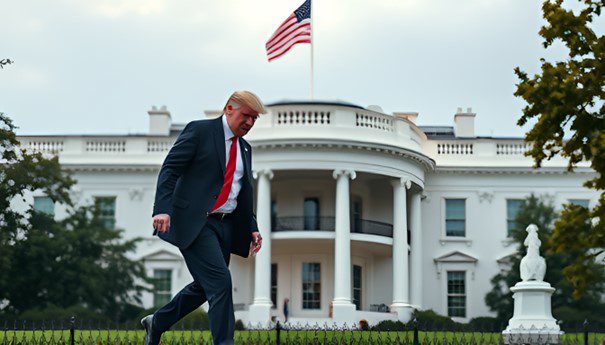
Trump has up ended just about every long held value: he attacks everyone with personal insults including supreme court justices, forcefully uses the military, relishes in the punishment of Cuba, has armed and aggressive agents ICE personnel deployed in American cities, launched his chaotic tariff wars, issues questionable pardons including for drug traffickers, seemingly uses every opportunity to enrich himself including suing his own government, and is antagonistic towards Panama, Greenland, Canada and others. In addition, while officials in other countries have come under scrutiny or have been arrested as a result of revelations from the Epstein files, he seemingly sails through.
The Durability Of His Base
Despite the relentless controversy, and reports of polling decline in the press, his core support base appears mostly unchanged; as these supporters prioritize: Immigration enforcement, trade protectionism, cultural politics, and resistance to what they see as government overreach over his other counterproductive actions.
With a highly polarized electorate, his committed minority in the mid-30 percent range can represent a formidable political base. There is no doubt it is intense. The question is whether it is expandable – can he recapture the 2025 numbers?
The record suggests that the durability of such movements ultimately depends on economic performance. Prosperity stabilizes. Recession destabilizes.
Thus, the trajectory of the Trump era is likely to be determined by two forces:
- Economic stability or instability, and
- Electoral erosion or reinforcement in the midterms – (assuming those elections proceed as planned.)
The Economy: SOTU Rhetoric Vs. Indicators
The President’s State of the Union painted a picture of rebound and restored momentum – using his premise that if you repeat it loud and often enough, people will come to take it as truth. However, the broader economic indicators suggest something more nuanced.
Growth has moderated rather than accelerated. Inflation, while off its peak, remains sticky relative to central bank targets. Employment remains historically strong, but job creation has softened. Forward-looking indicators signal caution rather than breakout expansion.
In other words: the economy is not collapsing, but neither is it surging.
This matters politically. Voters tend not to reward “technical stability.” They respond to felt conditions: Are prices meaningfully lower, are wages outpacing costs, is financial anxiety receding?
If the public mood remains one of cost pressure and fragility, even moderate macroeconomic stability may not translate into political strength for Trump.
The Mid-term Outlook
Historically, the president’s party almost always loses ground in midterm elections, particularly when approval ratings sit below 50 percent. Structural headwinds include: Turnout patterns that favor the opposition, economic dissatisfaction, fatigue with executive dominance.
Current polling trends suggest a competitive environment with a plausible path for opposition gains, especially in the House.
Should the administration lose House or both chambers, its agenda would shift from expansion to defense. His retaliatory investigations would intensify. Legislative ambitions would narrow. Executive action would become the primary tool – and flashpoint.
Thus, erosion of power through the midterms is a more plausible constraining mechanism than dramatic institutional collapse.
The Question Of Distraction
Trump is well known for drowning one controversy out of the headlines with an even more outrageous controversy. Others have engineered the “rally ’round the flag” effect by involving the US in external conflict.
A limited strike or sudden confrontation might produce a temporary surge. However large-scale military excursions are unpredictable and institutionally constrained. They are extraordinarily costly gambits. In today’s economic environment, a conflict that raises prices or destabilizes markets could just as easily accelerate political decline.
In short, a limited external distraction might momentarily consolidate support. A prolonged or economically damaging conflict would likely do the opposite.
The Larger Dynamic
The Trump era sits at the intersection of three forces:
- Norm disruption in democratic governance.
- Polarized but durable minority support.
- Economic fragility rather than boom.
If growth meaningfully accelerates and inflation subsides, the movement consolidates.
If stagnation deepens or recession emerges, the coalition frays.
If midterms shift congressional control, institutional or at least congressional constraints tighten; and the system itself: courts, states, elections, constitutional term limits – remains intact.
The greater risk is not sudden collapse but prolonged strain.
Will Tariffs Be The Final Miscalculation?
Trump entire second term was implicitly built around tariffs. It looked to returning manufacturing to the states, reducing trade deficits, and achieving other geopolitical goals – which would result in greater American prosperity. But he undervalued the reciprocal benefits to the US of trading partners in the intertwined global supply chain. And his erratic heavy handed threats against allies and trading partners has caused many countries including Canada, Australia and members of the EU to seek alternatives to the US – not an overnight decoupling but certainly a rebalancing over time and a serious blow to relations with allies – while not making any headway against competitors like China. Not only has this gambit seriously backfired, but just before The State of the Union the US Supreme Court struck down the legality of the broad authority Trump used to levy tariffs – a blow to the central element of his second term.
In modern democracies, movements weaken when prosperity fades, when costs rise, and when voters decide stability requires recalibration.
The decisive variable is unlikely to be scandal, rhetoric, or even international confrontation. It will be economic performance, and whether electoral mechanisms translate public unease into Trump constraint.
The coming mid-terms may not end the Trump era. But barring the unlikely possibility that his efforts to alter the electoral process somehow actually come about, the midterms will reveal whether his era is consolidating, or has reached its limits.
EDITOR’S NOTE: Ron Cheong is a frequent political commentator and columnist whose recent work focuses on international relations, economic resilience, and Caribbean-American affairs. He is a community activist and dedicated volunteer with extensive international banking experience. Now residing in Toronto, Canada, he is a fellow of the Institute of Canadian Bankers and holds a Bachelor of Science degree from the University of Toronto.