



News Americas, LONDON, England, Fri. Aug. 11, 2017: Tourism is a globally important industry playing an essential economic role in almost every nation in the world.
According to the World Travel & Tourism Council, (WTTC), in 2016, travel and tourism generated US$7.2 trillion or 9.8 percent of global GDP, and employs at least 284m people, a figure equivalent to 1.1 percent of all work in the global economy.
In the Caribbean, the industry is vital. Its total economic contribution has been growing year-on-year, and is forecast by the WTTC to reach US$73.6bn, or 15.4 percent of GDP, by the end of 2025, providing 14.4% of all employment in the region.
It is also a unique generator of growth. As Cuba and the Dominican Republic realized in the late 1980s, it can be scaled up rapidly, has almost immediate economic benefits in the form of foreign exchange, broadens the tax base, offers a wide range of employment opportunities, and attracts foreign investors. It can also help finance infrastructure, and has been shown to enhance the lives of very large numbers of people.
Unfortunately, its’ worth can cut both ways.
Recent events indicate that once a tourism industry has become an important contributor to a country’s economy, it has the potential to be used as a political weapon that can be turned on or off at will by states wishing to change the views of, or punish, other nations they disagree with.
The consequence is that some powerful governments now see the industry and their visitor flows as a coercive tool which they can exploit if required.
Two recent examples suffice.
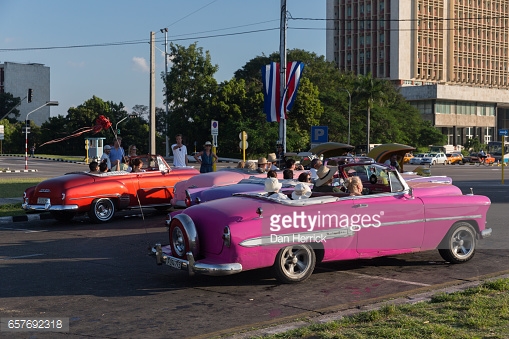
In mid-June, the US President announced measures aimed at reversing President Obama’s Cuba policy which had all but ended most restrictions on US citizens wishing to visit Cuba on an individual basis.
The new approach, the detail of which will not be available until September, will see new regulations that will end individual travel and restrict all new US business activities involving Cuban military enterprises, many of which are engaged in tourism through subsidiary companies. Together, the measures are expected to restrict US visitor spending and make it difficult for the average traveler to visit on anything other than an organized educational tour or a cruise ship.
Although Cuba’s highly diversified overall tourism market is still expected to continue growing rapidly this year – arrivals are forecast to reach 4.2m by the year’s end – the likely impact of the new US policy will be to significantly reduce visitor spend within Cuba’s economy.
Russia too is weaponizing tourism, apparently viewing its visitor flows to nations around the Mediterranean as a function of its foreign policy. For example, Russia banned charter travel to
Turkey in 2015 after the Turkish military shot down a Russian jet near the Syrian border. The ruling was reversed earlier this year as the two countries restored relations.
Much less well known is the case of Montenegro in the Balkans. As one of several retaliatory measures which followed the country’s decision to join NATO – the western mutual defense organization – Moscow suggested that the 0.2m Russians who have previously visited Montenegro each year, as well as the 80,000 Russians who have property there, should ‘reconsider’ their travel plans.
Thankfully it is hard to imagine anything similar happening in relation to the Caribbean beyond Cuba, other than adjustments to the travel advisories that governments in visitor source markets issue when they are concerned about their nationals’ personal safety or any public health risk.
Nonetheless, the use of tourism as a politically driven economic weapon appears to be spreading, not least because it is widely recognized as potent, given the immediate economic impact a sudden reduction in arrivals or airlift can have on host nations. For example, the German Foreign Minister recently suggested that German citizens were no longer safe from arbitrary arrest in Turkey following the arrest of a German human rights activist in the country.
This is a dimension of tourism that has been little considered and requires further debate, especially among those tourism professionals, governments and organizations who believe that travel, with its ability to spread wealth and create understanding of other people’s lives and cultures, is an important force for peace.
EDITOR’S NOTE: David Jessop is a consultant to the Caribbean Council and can be contacted at [email protected] . Previous columns can be found at www.caribbean-council.org