




By NAN Travel Editor
News Americas, NEW YORK, NY, Fri. June 16, 2017: That pesky Zika virus just won’t leave the Caribbean region alone.
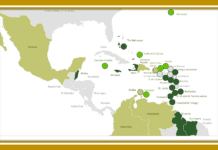
The World Health Organization’s latest Zika classification table has over 30 Caribbean countries listed as areas “with new introduction or re-introduction with ongoing transmission” of the virus, News Americas Now has found.
They are: Anguilla; Antigua and Barbuda; Aruba; Bahamas; Barbados;
Belize; Bonaire, Sint Eustatius and Saba; British Virgin Islands; Cayman Islands; Cuba; Curaçao; Dominica; Dominican Republic; Haiti, French Guiana; Grenada; Guyana; Jamaica; Martinique; Montserrat; Puerto Rico; Saint Kitts and Nevis; Saint Lucia; Saint Martin; Saint Vincent and the Grenadines; Sint Maarten; Suriname; Trinidad and Tobago; Turks and Caicos Islands and the United States Virgin Islands.
The only Caribbean country off the list is Saint Barthélemy.
ABOUT ZIKA
Zika is a virus spread by mosquitoes. It causes an infection that is typically mild and lasts only a few days. Symptoms of Zika virus can include fever, headache, conjunctivitis (pink eye), skin rash and joint and muscle pain. Many people who are infected do not have symptoms.
Zika can cause serious birth defects including abnormally small heads (microcephaly), brain abnormalities, vision and hearing loss, and more.
Zika virus is primarily spread through the bite of an infected mosquito. It can also be spread from: a pregnant woman infected with Zika virus to her developing fetus; a person infected with Zika virus to a sexual partner or a person infected with Zika virus who donates cells, blood or tissue.
There have also been increased reports of a serious nervous system disorder called Guillain-Barré syndrome in areas where the Zika virus is circulating.
There is no vaccine or medication that protects against or treats Zika virus infection.
PREGNANCY AND ZIKA
Pregnant women and those planning a pregnancy should avoid travel to countries or areas in the United States (Florida and Texas) with recent or ongoing risk of Zika virus. The Zika virus infection increases the risk for serious birth defects. Women can pass the virus to their unborn babies.
The Zika virus infection can be sexually transmitted and men can carry the Zika virus in their semen for up to 6 months. Partners should be aware of the risk so they can make informed travel decisions and to take appropriate precautions.
PREVENTATIVE TIPS
All travelers should prevent mosquito bites during the day, and night when traveling to countries at risk for Zika.
The mosquito that transmits the Zika virus usually bites during the day but can also bite at night. It is generally not found at altitudes above 2,000 meters; use insect repellent on exposed skin; cover up: wear light-colored, long–sleeved shirts and long pants; stay in rooms with air conditioning and places that have intact window and door screens and use bed nets that can also cover playpens, cribs or strollers.
For male travelers, Zika virus can persist for an extended period of time in the semen of infected males, therefore it is strongly recommended that if you have a pregnant partner, you should use condoms or avoid having sex for the duration of the pregnancy; you and your partner should wait 6 months before trying to conceive; use condoms or avoid having sex during that time and should consider using condoms or avoid having sex with any partner for 6 months.
For women planning a pregnancy, it is strongly recommended that you wait at least 2 months before trying to conceive to ensure that any possible Zika virus infection has cleared your body.