



By NAN Staff Writer
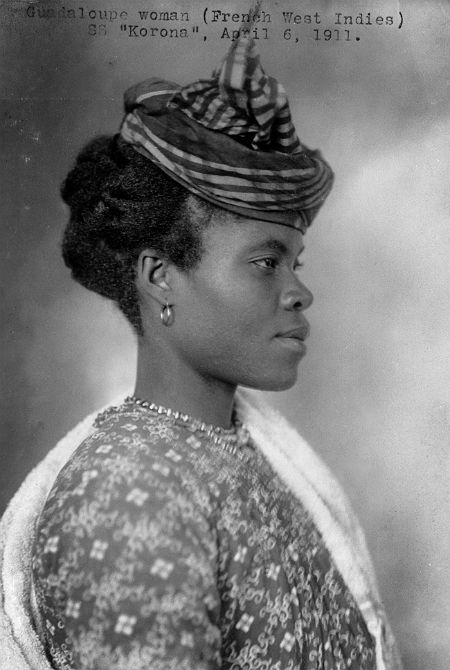
News Americas, NEW YORK, NY, Fri. June 24, 2016: With just one week to go before the official close of the 10th annual National Caribbean American Heritage Month, here are ten fast facts about the early migration of this immigrant group to the U.S. that you may not know:
1: Among the first Caribbean workers to come to the United States outside of slavery were Cuban tabaqueros or tobacco workers who followed Vicente Martinez Ybor, a Spanish businessman, to Key West in 1869 upon the outbreak of Cuba’s War of Independence from Spain a year earlier according to G. E. Poyo in ‘Cuban Émigré Communities in the United States and the Independence of their Homeland, 1852-1895,’ and black settlers from the Bahamas who began arriving in Key West at around the same time as the Cuban tabaqueros.
2: Nationals from the then British West Indians (BWI) territories arrived in the United States between 1899 to 1932 and by 1932, totaled approximately 108,000, representing 75% of all black migrants to the U.S. during that period, according to W. James in “Holding Aloft the Banner of Ethiopia: Caribbean Radicalism in Early Twentieth Century America.”
3: Of the 5,000 blacks counted in Miami in 1910, 3,500 were listed as “British subjects” –evidence of a strengthening Bahamian enclave. By 1915, there were also an additional 2,000 Bahamians spread out through various parts of Florida’s Atlantic Coast according to H. Johnson in “”Bahamian Labor Migration to Florida in the Late Nineteenth and Early Twentieth Centuries.”
4: The 1920’s saw the enactment of immigration legislation that curtailed West Indian resettlement in the United States significantly between both world wars, but nonetheless, 12,250 black immigrants entered the United States in 1924 in spite of very restrictive legislation, according to José Pérez Carrillo in ‘We Were Here: A Brief History of West Indian Migration to the United States of America from 1865 to 1965.”
5: Puerto Ricans were able to exploit a loophole in the law because they were also U.S. citizens so the Puerto Rican population in the continental United States grew to some 40,000 by 1930, with most in New York City.
6: The famed Ellis Island saw approximately 32,000 West Indians enter the United States in the first decades of the 20th century.
7: According to W. James in “Holding Aloft the Banner of Ethiopia: Caribbean Radicalism in Early Twentieth Century America,” 2 out of every 5 Caribbean immigrants to the United States from 1927 to 1931 were listed as “professional and skilled workers.”
8: By the end of the World War II, there were over 40,000 British West Indians in over one thousand communities scattered throughout 36 states across the U.S., Carrillo found.
9: Caribbean immigrants suffered tremendous discrimination including in wages earned, with Puerto Ricans and BWI earning from $8 to $13 per week in the garment industry while Jewish and Italian workers earned from $26 to $44 per week.
10: Still, according to Carillo and James, “a unique yet integral part of the West Indian experience in the United States in the period of time between 1865 and 1965 was the practice of challenging the aforementioned racist injustices.” Some instances were subtle, such as an episode in 1931 when a group of immigrants from Trinidad were confronted by bigots at a gas station in Texas only to receive a warm reception when the Trinidadians convinced the Texans that they were from Ethiopia or when a young Sidney Poitier challenged the prevailing attitudes of whites as a fifteen year old by defiantly castigating a desk sergeant at the Miami Police Department for calling him “boy.”