





By NAN Staff Writer
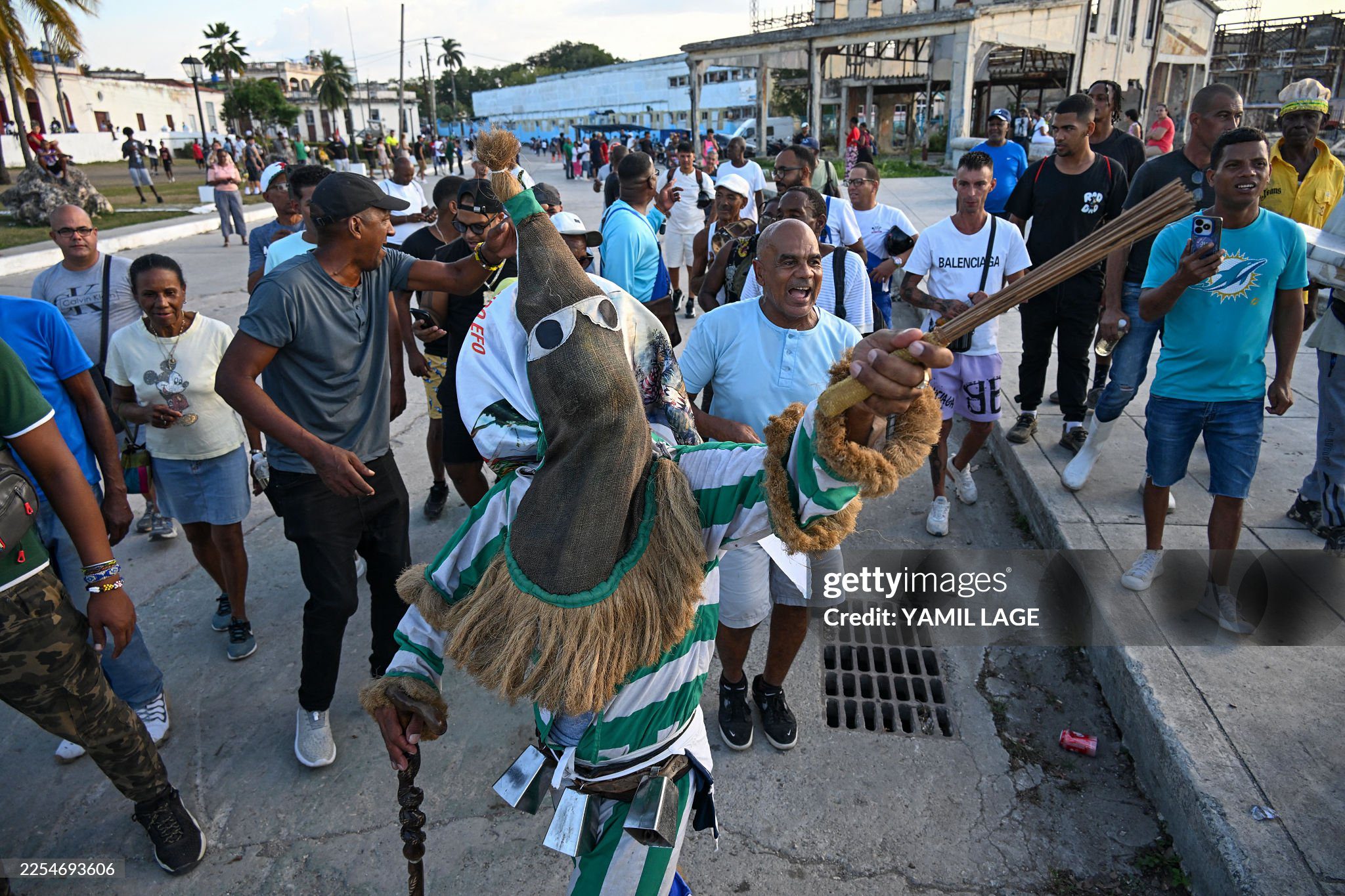
News Americas, NEW YORK, NY, Tues. Jan. 13, 2026: Drumbeats echoed through the streets of Regla on January 8th as Cuba marked Abakuá Day, commemorating 190 years since the founding of the Abakuá fraternity – one of the island’s most enduring and least understood Afro-Cuban traditions.

In the coastal neighborhood across the bay from Old Havana, residents and onlookers gathered as an Ireme -the masked, whip-carrying dancer who serves as the public embodiment of Abakuá ritual – performed a rare ceremonial appearance. Clad in elaborate regalia and moving with sharp, commanding gestures, the Ireme transformed the streets into sacred space, signaling both celebration and continuity.
Founded in the Havana municipality of Regla during Spanish colonial rule, the Abakuá society traces its origins to enslaved Africans brought to Cuba from the Calabar region of present-day Nigeria in the early 19th century. Rooted in Efik and related West African traditions, Abakuá developed as both a religious system and a mutual-aid fraternity, offering protection, solidarity, and spiritual grounding to men living under enslavement and racial repression.
The word Abakuá is believed to derive from ibakuá, meaning “house of the spirits” in the Efik language – an apt name for a tradition that has survived through secrecy, symbolism, and strict codes of loyalty.
A Brotherhood Shaped by Secrecy and Survival
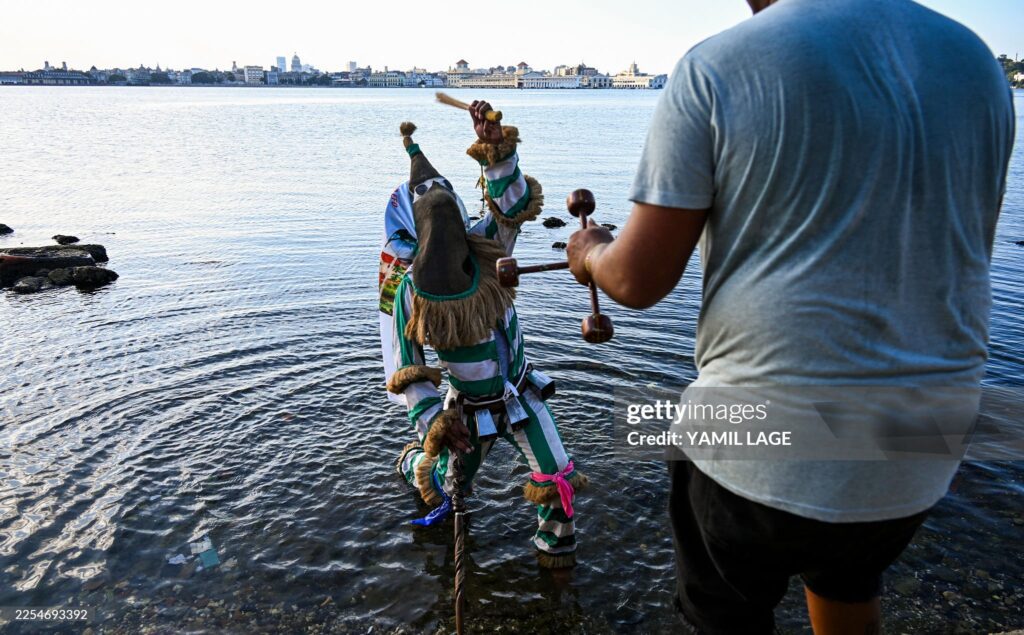
Abakuá is a male-only secret society, historically accepting only heterosexual men, structured around sacred knowledge that is transmitted orally and ritually rather than through written texts. Its members are divided into two groups: ikúlés, the active participants in ceremonies and rites, and egbóns, initiated members who no longer take part in ritual life.
At the heart of Abakuá belief is reverence for African ancestral forces, particularly the spirit known as Ekpe, whose symbolism and authority echo West African spiritual systems. Scholars have often compared Abakuá’s guarded rites to the Eleusinian Mysteries of ancient Greece, where sacred knowledge was protected from public exposure and initiation marked a profound transformation of identity.
During the colonial era, Spanish authorities viewed Abakuá as a destabilizing force. Its secrecy, discipline, and independence made it suspect, and members were frequently persecuted, surveilled, or criminalized. Yet, the fraternity endured – meeting in clandestine spaces, encoding messages through rhythm and movement, and preserving tradition through collective memory.
It is, in many ways, a story of cultural survival against systemic erasure.
From Margins to Cultural Heritage
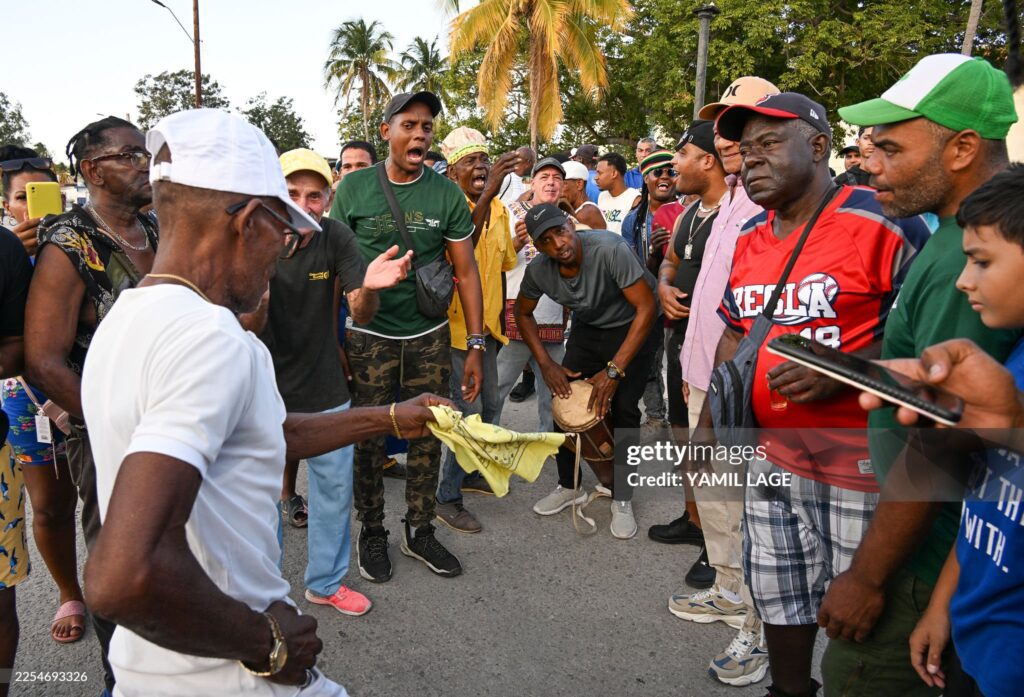
Today, Abakuá is recognized as an essential pillar of Cuban cultural heritage, deeply embedded in the nation’s music, dance, and identity. While its rituals remain closed to outsiders, its artistic expressions – especially drumming, chant, and movement – have shaped Cuban popular culture for generations.
Abakuá-influenced music and dance, often referred to as palo, feature forceful, grounded movements and intense polyrhythmic drumming designed to awaken spiritual presence. These traditions are particularly strong in the city of Matanzas, widely regarded as a center of Afro-Cuban culture and home to major Abakuá lodges.
One of the most internationally recognized ensembles carrying this tradition forward is Yoruba Andabo, whose performances have introduced global audiences to Abakuá-influenced rhythms while honoring their sacred origins. Though presented on concert stages, the music retains its ritual gravity – never fully divorced from its spiritual roots.
An Evolving Presence in Modern Cuba
While Abakuá remains intentionally opaque, its influence is unmistakable. Visual artists, writers, and painters have long drawn inspiration from its symbolism – particularly the Ireme figure – using it to explore themes of masculinity, resistance, spirituality, and Afro-Cuban identity. Yet scholars note that Abakuá is still under-explored in mainstream cultural narratives, often overshadowed by more visible Afro-Cuban religions such as Santería.
For practitioners and community members, that partial invisibility is not a flaw but a form of protection.
“Secrecy is not about exclusion,” one cultural historian noted during the Regla celebrations. “It’s about preservation.”
As Cuba continues to reckon with its African past and present, the 190th anniversary of Abakuá serves as a reminder that some traditions endure not by being fully seen, but by being carefully guarded – passed from generation to generation through rhythm, movement, and unspoken understanding.
In the masked steps of the Ireme and the thunder of drums in Regla, history did not merely repeat itself on Jan. 8th. It lived.