




By Felicia J. Persaud
News Americas, PANAMA CITY, Panama, Fri. Mar. 13, 2026: I recently traveled to Panama to celebrate my aunt’s 70th birthday and found something I did not fully expect – the unmistakable taste of the Caribbean – almost everywhere in the local food.
From coconut rice and fried plantains to seafood simmered in coconut milk and fiery peppers, the flavors felt instantly familiar to anyone raised in the Caribbean. And that is no coincidence.
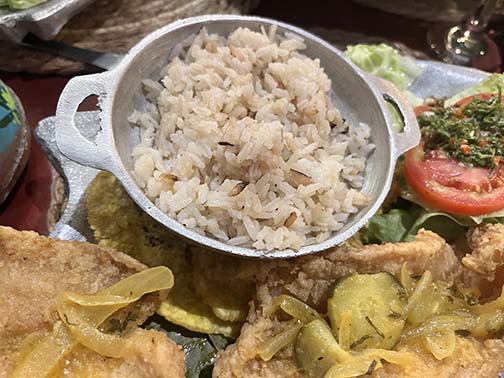
Coconut rice served with plantains and fish at En La Fonda in Panama. (NewsAmericasnow.com image)
Panama’s cuisine carries a deep Caribbean imprint, largely because thousands of West Indians helped build the Panama Canal more than a century ago. Workers from Jamaica, Barbados and other Caribbean islands arrived during the canal construction period between the late 1800s and 1914, bringing with them their cooking techniques, spices and ingredients.

Mahi Mahi in Coconut milk at Kobore in Panama City, Panama. (NewsAmericasnow.com image)
Those traditions never left.
Today, the Caribbean influence remains especially visible in coastal areas like Colón and Bocas del Toro and throughout Panama City itself, where Afro-Antillean communities helped shape the nation’s culinary identity.
Many of the ingredients and flavor profiles are immediately recognizable to Caribbean palates – coconut milk, thyme, curry powder, plantains and spicy peppers such as the Scotch bonnet or the local ají chombo.
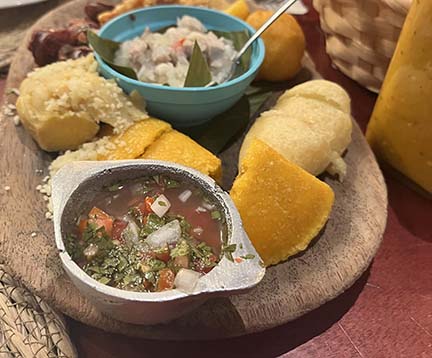
From empanadas to salsa at En La Fonda in Panama City, Panama. (NewsAmericasnow.com image)
Rice and beans cooked in coconut milk are common staples, similar to Jamaican rice and peas. Seafood is often simmered in rich coconut sauces, while stewed meats reflect the cooking traditions Caribbean migrants brought with them.
During my visit, I encountered these flavors again and again.

Dinner served in banana leaves at En La Fonda, Panama. (NewsAmericasnow.com image)
One of my first local meals was at En La Fonda in Panama City’s historic Old Town, where I enjoyed fried fish served with coconut rice, fried plantains and vegetables. The dish could easily have come from a Caribbean seaside restaurant.
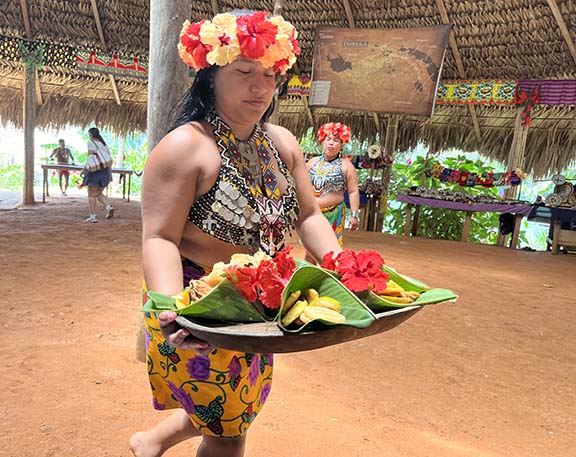
An Embera woman serves tourists patacones and fried tilapia in banana leave pouches in Panama. (NewsAmericasnow.com image)
Later, during a visit to an Emberá Indigenous village outside the capital, lunch included crispy patacones – twice-fried green plantains – paired with fried tilapia. Again, the Caribbean influence was unmistakable.
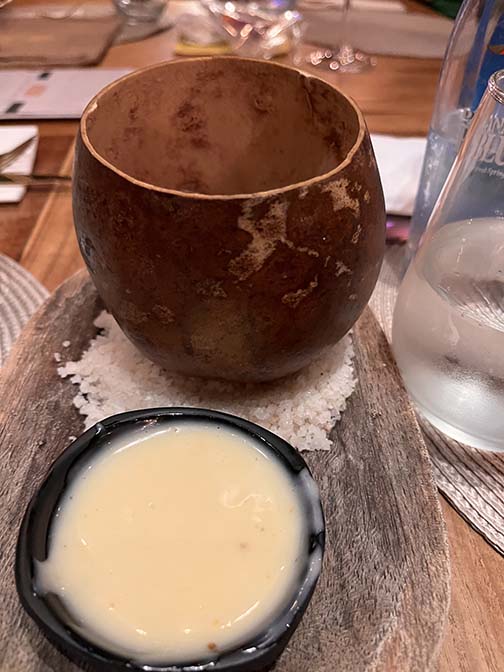
Appetizers are served in a calabash at Kobore in Panama City, Panama. (NewsAmericasnow.com image)
Another highlight came in Casco Viejo, the beautifully restored historic district of Panama City, where I dined at the elegant restaurant Kobore. There, I had a delicious mahi-mahi dish served in a rich coconut milk sauce that instantly transported me back to the Caribbean.
On my final night in Panama, dinner along the Amador Causeway at Praia Amador brought yet another familiar plate – prawns in coconut milk served with coconut rice.
Of course, the meal was washed down with Balboa, Panama’s well-known national beer.
Across the meals, the flavors were bold, fragrant and deeply Caribbean. Coconut milk and coconut oil featured heavily, alongside seafood such as corvina, shrimp and octopus. Plantains appeared in many forms – fried, flattened into patacones, or even mashed.
Breakfast even brought a surprise. At the Renaissance Hotel in Panama City, a staff member named Lila introduced me to mashed plantains – a dish I had never considered eating in the morning and plantain casserole, another example of the region’s creative use of the plantain.
The Caribbean culinary legacy in Panama goes beyond just a few dishes. It represents generations of cultural exchange between Afro-Caribbean migrants and the local population, creating what many describe as an Afro-Panamanian or Afro-Antillean culinary tradition.
Among the most iconic foods are bon bread – a spiced sweet bread popular in Afro-Antillean communities – codfish fritters, and souse, a pickled dish made from pig feet or cow heel. Sounds familiar? Because we in the West Indies have these too!
Together, these foods tell the story of a migration that reshaped Panama’s culture.
The workers who arrived to build the canal did far more than dig one of the world’s most important waterways. They left behind traditions that remain alive in music, language and especially food.
One simple example is the coconut rice often served across Panama.
Here is a recipe for Panamanian Coconut Rice with Red Beans, a dish that perfectly captures the Caribbean flavor influence.
Coconut Rice with Red Beans
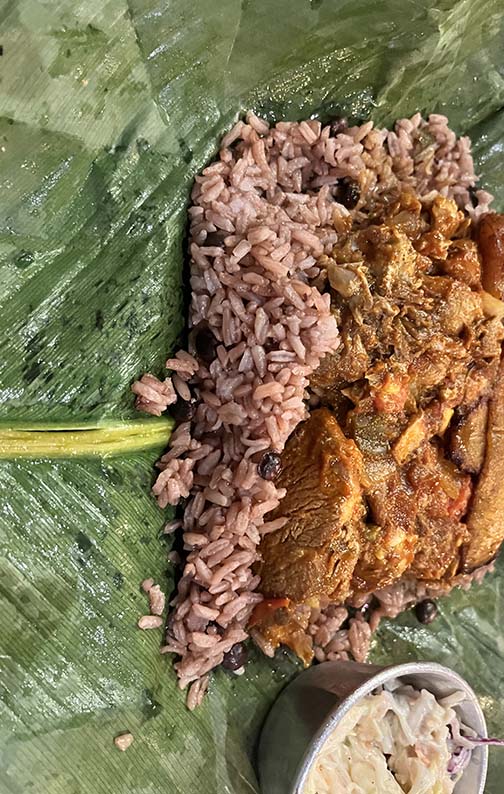
Coconut rice served on a banana leaf at En La Fonda in Panama City, Panama. (NewsAmericasnow.com image)
Ingredients
• 200g long grain rice
• 500ml vegetable stock
• 200ml coconut milk
• 1 onion
• 1 red pepper
• 2 tablespoons oil
• 1 can red beans
• Sea salt and white pepper
METHOD
- Wash and chop the onion and red pepper. Heat the oil in a pan and sauté the vegetables for a few minutes.
- In another pot, bring the vegetable stock and coconut milk to a boil.
- Add the washed rice to the vegetables and stir briefly. Pour the coconut stock mixture over the rice, add the drained red beans and season with salt and pepper.
- Cook over medium heat for about 15 minutes until the rice is tender.
- Serve warm.
The result is a fragrant dish that reflects the Caribbean flavors that traveled with workers more than a century ago and still define parts of Panama’s culinary landscape today.
For Caribbean visitors, the experience can feel surprisingly familiar. Sometimes, a single bite of coconut rice or fried plantains is enough to remind you that the Caribbean story extends far beyond the islands themselves.
EDITOR’S NOTE: Felicia J. Persaud is CEO of Invest Caribbean and AI Capital Exchange and founder of NewsAmericasNow.com.