


News Americas, LONDON, England, Fri. Jan. 29, 2016: Drones, the unmanned aerial vehicles (UAV) loved by hobbyists but which have important everyday civilian and military applications, are starting to become an issue in the Caribbean, raising unusual questions for governments and the tourism industry.
The issue falls in to three distinct areas: safety, security and regulation; commercial opportunity; and privacy.
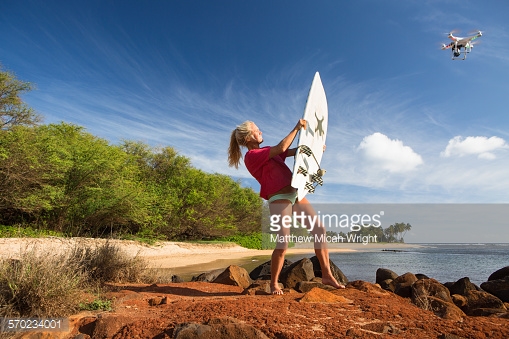
Read online hobbyist publications like Dronelife.com and it is clear that taking your drone on a vacation has become an ‘epic way to catalogue your summer exploits;’ is much cooler than taking selfies, and is the best way of ‘capturing your visit to the beaches of the Caribbean.’
Fun aside, however, Dronelife recognizes the growing challenges faced by visitors travelling with a UAV, with its readers citing examples of having to pay duty in the Bahamas, a complete ban in Nicaragua, the more common experience of uncertainty among customs officers and the police in nations from St. Vincent to Cuba, and uncertainty about which if any Caribbean country requires a license.
There are also, it seems, significant airline safety concerns relating to checking-in drones because of the lithium batteries they use, and with hoteliers, who in some cases are concerned about client privacy.
More specifically, when it comes to Caribbean safety, security and the regulation of UAVs, my research suggests that there is no joined up regional approach as to their use by either citizens or visitors, and that better and more consistent regulations may now be required with appropriate information made available to visitors before they depart.
The trouble with this is that some Caribbean islands have no relevant legislation or regulations over it, other that it seems in relation to kite flying. Even where there are UAV-specific regulations, it is unlikely that any country has a police force equipped or able to catch those who break the rules. Moreover, it is clear from online blogs by drone flyers that it is very hard for them to discover what local controls exist.
The paramount issue is safety. Drones pose a significant danger if used close to airports and are a potential threat if used in sensitive areas where elevated security is required. This is resulting in an increasing number of warnings from local authorities in the region to operators, noting that they could face prosecution if they are caught flying their devices in designated zones. For instance, Barbados has recently said that it is reviewing all rules and processes governing the importation and use of drone technology, even though it already restricts recreational flying of UAVs to four designated areas in the country and requires an operating license.
On the positive side, however, commercially used drones have become a key support and promotional vehicle for the marketing of hotels and many Caribbean destinations and locations, as well as to sell real estate to overseas buyers. This is because the bird-like ability of drones to fly and swoop over islands, hotels, beaches and the countryside, providing high resolution panoramic and close up pictures in ways that, with the right soundtrack and voice-over, add dramatically to the ability to romanticize and sell a vacation. They also have an increasingly important role in the Caribbean in addressing environmental issues, weather forecasting and national security.
As a consequence many companies are emerging in the region and internationally specializing in UAV photography and other applications and are actively selling their services to governments, tourist boards, hoteliers and all manner of local and international agencies.
Offsetting this is the issue of personal privacy. Hoteliers and the tourism industry are regularly concerned about how to protect their celebrity guests who value the approach that most Caribbean destinations and local people take in respecting their privacy. However, this is changing as the international media have begun to pay large sums for pictures or video footage of movie stars, footballers and others in the privacy of their villa or hotel. This is leading to drone users from paparazzi to individuals not just seeking out the well-known, but in some cases picturing other visitors who have come to the Caribbean because it offers them privacy, tranquility and the opportunity to enjoy themselves.
Drones are yet another form of disruptive technology that governments and the industry will have to come to terms with. The challenge will be to determine how best to balance security and privacy against commercial value and the individual freedom that taking a vacation implies.