




News Americas, New York: While many Americans today are categorized as “Black” or “African Americans” in the U.S. Census, a significant number may descend from Afro-Caribbean immigrants who arrived in the United States during the early 20th century – long before multicultural identity was formally recognized in federal data.
According to historian and archivist Damani Davis, tens of thousands of Afro-Caribbean, or “West Indian,” immigrants migrated to the U.S. between the 1910s and 1930s, and in some cases, even earlier. In his publication Ancestors from the West Indies: A Historical and Genealogical Overview of Afro-Caribbean Immigration, 1900–1930s, Davis documents how these immigrants primarily settled in northeastern port cities – particularly New York City, which became the epicenter of West Indian cultural life in the U.S. At the same time, South Florida attracted a substantial number of Bahamian migrants, who established vibrant communities in areas like Broward County and Miami.
Some Caribbean immigrants maintained distinct national identities or a pan-West Indian ethnic identity, while others integrated into Black American life, often through intermarriage or shared social experiences. Regardless of the path, Davis notes, the majority of their descendants are now officially recorded as African American—effectively blending Caribbean ancestry into the broader Black American narrative.
“These early Afro-Caribbean immigrants brought with them unique cultural traditions and helped shape the evolution of Black American identity,” writes Davis. He emphasizes the role of federal naturalization and citizenship records – available through the U.S. National Archives—as a powerful genealogical resource for Black Americans tracing their roots to the Caribbean.
Davis, an archivist in the Research Support Branch of the Customer Services Division at the National Archives in Washington, D.C., has lectured widely on African American history and genealogy. A graduate of Coppin State College in Baltimore, he earned his M.A. in history from The Ohio State University. His extensive research has helped uncover the complex migration patterns and cultural exchanges that continue to shape the African diaspora in America.
“These records follow standard immigration research methods and are crucial in reconstructing a fuller, more inclusive historical narrative,” he explains in the book.
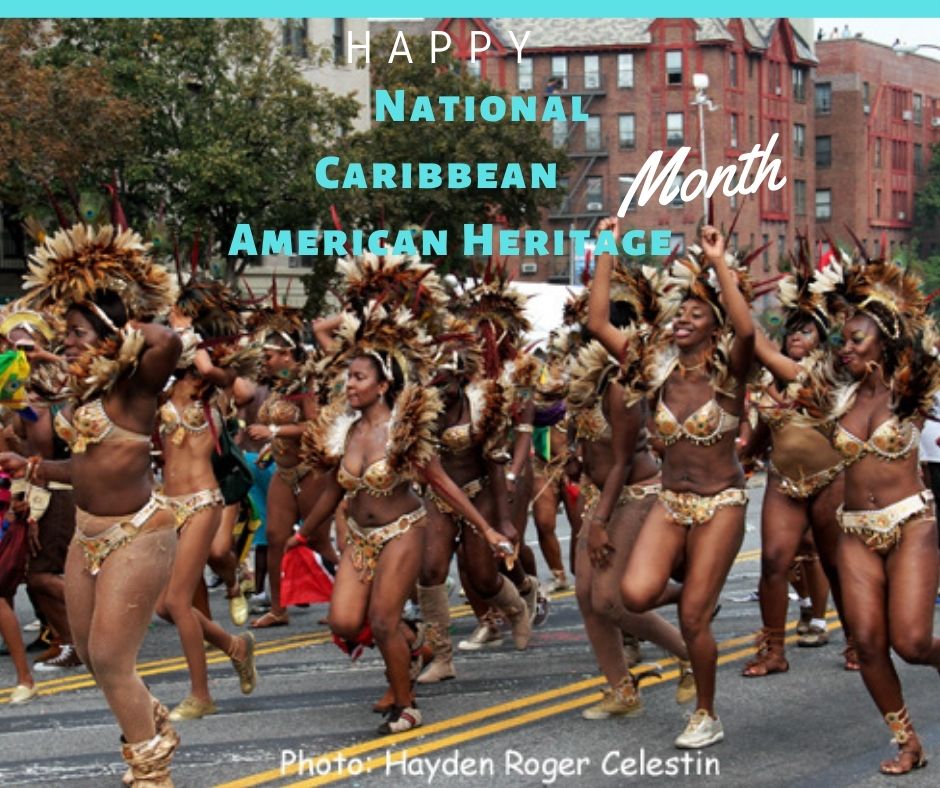
As Caribbean American Heritage Month is observed, Davis’s work offers a timely reminder that the African American experience is layered and transnational – and that the contributions of early Afro-Caribbean immigrants are both foundational and enduring in U.S. history.