



By NAN Staff Writer
News Americas, NEW YORK, NY, Fri. Feb. 3, 2017: When Black History Month is discussed, West Indian blacks who have made a significant contribution to the United States’ black history are rarely ever acknowledged. Yet their contribution remains inedible. Here are five Jamaican immigrants – beyond Marcus Garvey – who U.S. Black History has all but forgotten:
John Brown Russwurm
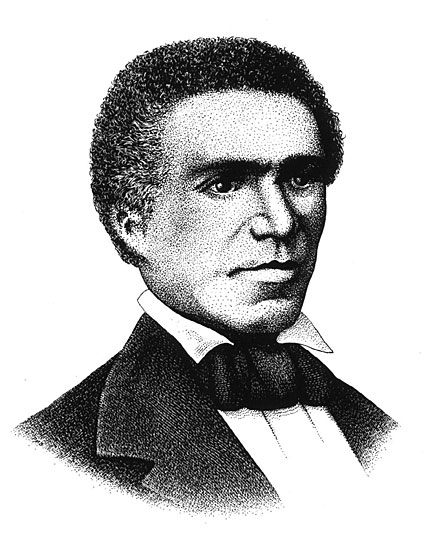
John Brown Russwurm was an American abolitionist who was born in Port Antonio, Jamaica to an English father and an enslaved mother. As a child he traveled to the United States with his father and received a formal education, becoming the first African American to graduate from Bowdoin College and third African American to graduate from an American college. As a young man, Russwurm moved from Portland, Maine, to New York City, where he was a founder with Samuel Cornish of the abolitionist newspaper, Freedom’s Journal, the first paper owned and operated by African Americans. Russwurm became supportive of the American Colonization Society’s efforts to develop a colony for African Americans in Africa, and he moved in 1829 to what became Liberia. In 1836 Russwurm was selected as governor of Maryland in Africa, a small colony set up nearby by the Maryland State Colonization Society. He served there until his death in 1851. The colony was annexed to Liberia in 1857.
W. A. Domingo.
Wilfred Adolphus Domingo was born in Kingston, Jamaica and became an activist and journalist and the youngest editor of Marcus Garvey’s newspaper the Negro World. As an activist and writer, Domingo travelled to the United States advocating for Jamaican sovereignty as a leader of the Black Brotherhood and the Harlem Socialist party. Through this role, he gained the attention of Alain Locke during the Harlem Renaissance. Domingo was a contributor to Locke’s anthology The New Negro. Domingo’s essay “The Gift of the Black Tropics” gave an account of the sudden immigration of foreign-born Africans of the West Indies to Harlem during the early 1920s.
Claude McKay
Clarendon-born Festus Claudius McKay, who later became known as Claude McKay, first wrote poems primarily in the Jamaican dialect but switched to Standard English forms after moving to the United States in 1912 to attend Tuskegee University. His militant sonnet “If We Must Die” was first published in 1919 during a period of intense racial violence. The poem noted for its revolutionary tone became popular among African American readers and is considered a landmark of Harlem Renaissance. McKay became involved with a group of black radicals who were unhappy both with Marcus Garvey’s nationalism and the middle-class reformist NAACP. These included other Caribbean writers such as Cyril Briggs, Richard B. Moore, and Wilfrid Domingo. They fought for black self-determination within the context of socialist revolution. Together they founded the semi-secret revolutionary organization, the African Blood Brotherhood. His 1928 novel Home to Harlem became a best-seller and won the Harmon Gold Award for Literature. The following year his novel Banjo was published which was hailed as a radical work that envisioned the black political identity in a global framework. McKay was among the most famous writers of the Harlem Renaissance and an influential figure of the movement.
Joel Augustus Rogers
Joel Augustus Rogers was a Negril, Jamaica-born author, journalist, and historian who contributed to the history of Africa and the African Diaspora, especially the history of African Americans in the United States. Rogers emigrated from Jamaica to the United States in 1906, where he settled in Harlem, New York and became a close personal friend of the Harlem-based intellectual and activist Hubert Harrison. Rogers’ first book From “Superman” to Man, self-published in 1917, attacked notions of African inferiority. From “Superman” to Man is a polemic against the ignorance that fuels racism. In the 1920s, Rogers worked as a journalist on the Pittsburgh Courier and the Chicago Enterprise. He was a sub-editor of Marcus Garvey’s short-lived Daily Negro Times. He was one of the greatest popularizers of African history in the 20th century.
Thaddeus Alexander Kitchener
Thaddeus Alexander Kitchener, a Kingston, Jamaica-born immigrant, is believed to be the first black graduate of Suffolk Law School, a private, non-sectarian law school located in downtown Boston, Massachusetts. He graduated class of 1913. At the time of his admittance to Suffolk, Kitchener, according to the Suffolk University Archives, was employed as a janitor at Simmons College in Boston. Kitchener was an alumnus of Wolmers High School in Jamaica.