



News Americas, NEW YORK, NY, Mon. Jan. 12, 2014: The world paused today to remember the destructive Haiti earthquake of January 12, 2010. Five years after that tragic day is an appropriate time to honor the bravery shown by the Haitian people during those bleak days after the tremors and to laud the compassion that Haitians demonstrated as they worked selflessly day and night to rescue and care for loved ones, neighbors, and strangers alike.
The intense international focus that followed reflected the outpouring of global sympathy. Five years later, Haiti is considerably less in the headlines. This can be a good thing as it indicates progress toward recovery and normalcy. But Haiti will require our sustained attention for years to come.
To be clear, notable progress has been made since 2010. There are positive indicators in economic growth, job creation, basic health, access to primary education, shelter for displaced persons, security and crop yields. Foreign assistance helped, but Haitians deserve most of the credit. There still is a long way to go, and further progress will require good decisions by the Haitian government and sustained international support.
After the earthquake, the U.S. Congress responded generously by making available $4 billion for Haiti, about 77 percent of which has been disbursed to date. U.S. assistance is broad, and the positive impact it is having in several key sectors is often overlooked.
For example, in the Haitian countryside are 70,000 Haitian farmers who today enjoy higher incomes because they have dramatically increased their crop yields with assistance from U.S.-supported agricultural programs. Some 328,000 earthquake-displaced Haitians found shelter solutions through U.S. programs.
Did you know that almost half of all Haitians can access core health services at U.S-supported health clinics? As a result, Haiti is seeing improved child-immunization rates, HIV/AIDS testing and treatment and maternal-health indicators. Some 5,000 Haitians found employment at the new U.S.-supported Caracol Industrial Park in the north, and more jobs are anticipated for 2015 as new factories come on line.
Creole-speaking members of the New York Police Department have been accompanying their Haitian counterparts on the beat in Port-au-Prince, helping establish Haiti’s first community-policing program. Today there are an additional 3,300 trained and commissioned Haitian National Police officers, thanks to U.S. support to help the government of Haiti reach its goal of 15,000 officers by the end of 2016.
Even before the earthquake Haiti faced systemic issues that hindered development, including weak institutions, outdated business regulations and corruption. Consequently, the U.S. government’s post-earthquake strategy was designed to be flexible. We faced significant challenges in building new permanent housing and in obtaining adequate private-sector support for a new port in Haiti’s north. As a result, we have adjusted these programs to focus more on developing housing finance for low-income Haitians and renovating and expanding an existing port to accommodate the growing economic activity in Haiti’s north.
Critical at this juncture is seeing that Haiti’s democratic development continues on a forward trajectory. The United States strongly supports the right of Haitians to have a voice in their government through timely free and fair elections.
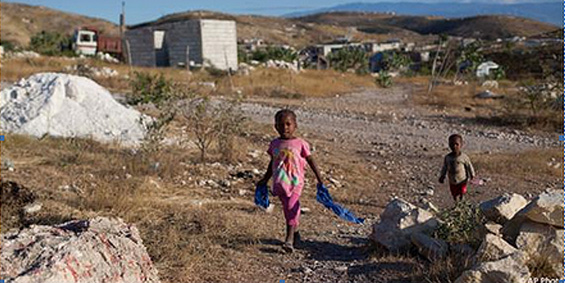
Haiti still needs our help. We can do justice to those lost and to all that has been achieved by taking a closer look at Haiti and seeing not only its challenges but also its potential. Haiti has enviable assets that can lead to sustained development such as proximity to the U.S. market, a rich culture and Caribbean coastline, and a young highly motivated work force. A priority of the United States in the years to come is helping Haiti to leverage these advantages and to sustain our commitment to helping Haitians achieve stability and development.
Editor’s Note: This entry originally appeared as an opinion piece in the Miami Herald. The Author: Thomas C. Adams serves as Haiti Special Coordinator for the U.S. Department of State.