

By NAN Staff Writer
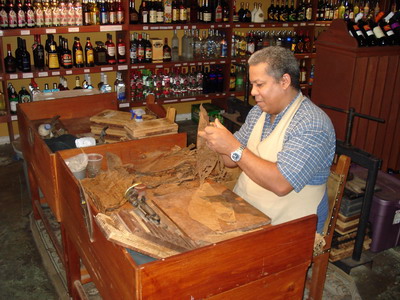
News Americas, WASHINGTON, D.C., Fri. Dec. 19, 2014: President Barack Obama’s historic executive policy changes towards Cuba, as announced on Wednesday, has many excitedly thinking of travel to the island and the return trip with those prized Cuban cigars and rum.
But hold off on the celebration just yet. The U.S. Department of Treasury and the Department of Commerce on Thursday said changes to the laws could take weeks before becoming a reality.
The Department of Commerce must first implement the remainder of the changes via amendments to its Export Administration Regulations. Under the Cuban Assets Control Regulations, administered by the U.S. Department of the Treasury’s Office of Foreign Assets Control (“OFAC”), regulatory amendments must be done in the coming weeks before any of the President’s policy changes will go into effect.
“None of the announced changes takes effect until the new regulations are issued,” the U.S. Department of the Treasury said Thursday.
Under the new rules announced by the President, U.S. visitors who are allowed to travel to Cuba will be able to return to the U.S. with Cuban cigars and rum worth up to $100. Those imports will only be for personal use and not for import or resale.
But as of right now, anyone who travels to Cuba and returns with cigars or rum before the OFAC rules are publicly amended, will still face criminal penalties for violation of the US rules and face fines of up to $250,000 for individuals and $1,000,000 for corporations. They may even face jail time of up to 10 years in prison. Civil penalties of up to $65,000 per violation may also be imposed by OFAC.
Ironically, OFAC does not consider cigars produced from tobacco grown and harvested in a third country from Cuban seeds to constitute a growth or product of Cuba. Therefore, the Regulations do not prevent transactions or dealing in those products by persons subject to the jurisdiction of the United States, as long as there is no interest of Cuba or a Cuban national, direct or indirect, in the sale of such cigars.
The U.S. State Department’s Assistant Secretary of the Bureau of Western Hemisphere Affairs, Roberta S. Jacobson, yesterday reiterated the need to wait for agency changes to reporters in a briefing in D.C.
None of the announcements that the President made yesterday, go into effect immediately,” Jacobson said. “They all have to be implemented, whether it’s the restoration of diplomatic relations, which has to be processed, right – we have to do that with the Cuban Government in terms of implementation – or the regulation changes that will have to be made to expand purposeful travel to general licenses or other things. All of those will have to be done via regulatory changes that Treasury and other agencies are working on right now, and will be published as quickly as they can.”
Still the excitement over Obama’s end to 50 plus years of U.S. blockade against Cuba continues. “I haven’t been this excited about a shift in geopolitics since the Berlin Wall came down,” Lauren Burnhill, author of ‘My Summer in Havana: Coffee, Tobacco & Capitalism in Rural Cuba 1959-1985’ told News Americas.
Burnhill spent two months in Havana in 1985 after receiving a grant from the Ford Foundation and the Johns Hopkins School of Advanced International Studies, Cuban Studies Program to research the last vestiges of private sector agriculture.
She knows firsthand what it was like to get permission to spend money on soap, beer or whatever necessities in Cuba so the President’s decision to allow Americans who are able to travel there to use their debit and credit cards resonates with her.
“What I learned (while in Cuba) was both heartwarming and a bit astonishing,” the D.C.-based Burnhill reminisced in her book. “I left Cuba with mixed feelings and I wonder to this day why massive social change remains the purview of communism and populism. Is there something inherent in democracy that makes us care less about the well-being of our fellow man / woman? How is it that the Castro managed to create a fully literate society in a few years and our “No Child Left Behind” initiative is more “Not All Children Left Behind All of the Time”? Why didn’t a literate, well-educated population lead to a more vibrant economy? Would central planning have worked if done “better” or are the politics of communism an insurmountable obstacle to sustainable growth?”