





From Granny’s Kitchen: Caribbean Christmas Recipes Passed Down Through Generations
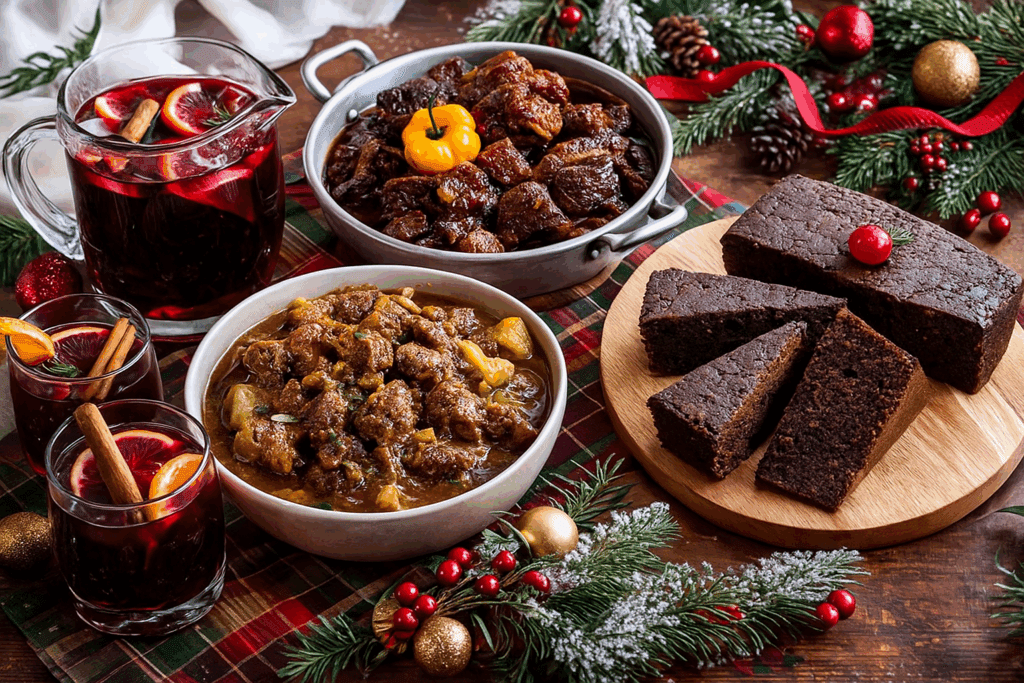
Granny’s Black Cake
Old-Time Sorrel
Pepperpot That Simmered All Night
Homemade Ginger Beer
News Americas, NY, NY: Caribbean Christmas is not merely a holiday – it is an act of remembrance, reinvention, and resistance. Across the region, Christmas arrived through colonial rule and Christian doctrine, yet Caribbean people reshaped it into something entirely their own. What emerged was not imitation, but transformation: a season rooted in ancestral memory, community survival, and cultural pride through Caribbean Christmas foods.
At the heart of Caribbean Christmas is food. Not as decoration. Not as excess. But as storytelling.
From rum-soaked cakes and pepperpot simmered for days, to sorrel brewed with cloves and ginger, Caribbean holiday foods carry the weight of history. They turn survival ingredients into celebration. They honor African ancestors, Indigenous knowledge, and the ingenuity of people who created abundance from scarcity.
This is not just cuisine. It is cultural continuity on a plate.
Caribbean Christmas As Cultural Survival
While Caribbean Christmas retains its Christian foundations – church services, family gatherings, gift-giving—it extends far beyond December 25. In many islands, Christmas unfolds as a season of music, movement, and communal ritual.
Festivals such as Jamaica’s Jonkunnu parades, Trinidad and Tobago’s Parang celebrations, and St. Lucia’s Festival of Lights blend African rhythms, European traditions, and Indigenous storytelling into living expressions of identity. These are not borrowed customs; they are reclaimed ones.
Across the region, Christmas became a space where enslaved and colonized people carved joy into a system that denied them both time and humanity. Celebration itself became survival.
African, Indigenous, and Colonial Influences on Caribbean Holiday Food
African Roots
African ancestors brought more than resilience – they brought culinary mastery. Ingredients like okra, yams, plantains, rice, and complex spice blends formed the backbone of Caribbean cooking. Techniques such as slow roasting, fermentation, and spice layering transformed limited resources into deeply flavorful dishes. Holiday staples like jerk-seasoned meats and richly spiced stews reflect this legacy.
Indigenous Foundations
The Caribbean’s first peoples contributed the land’s original language of food. Cassava, corn, sweet potatoes, peppers, and smoking methods shaped early Caribbean diets long before colonization. These elements remain essential to holiday cooking, grounding Christmas meals in the soil and sea of the islands themselves.
European Layers
Colonial rule introduced wheat, dairy, wine, citrus, and preserved fruits – ingredients that were absorbed, adapted, and Caribbeanized. Dishes like black cake, pastelles, and Christmas puddings reflect this fusion, reworked through African techniques and local flavors.
Food as Memory, Resistance, and Identity
Caribbean holiday foods are memory encoded in taste.
A slice of black cake carries years of rum-soaked fruit, patience, and generational knowledge. Pepperpot tells a story of preservation and endurance. Sorrel speaks of harvest cycles, healing, and celebration. These foods connect modern kitchens to ancestral kitchens, across oceans and centuries.
Eating traditional holiday food is also an act of resistance. Enslaved people were forced to survive on scraps—yet they turned those scraps into feasts. They transformed imposed holidays into spaces of self-expression. Even when African dishes were mislabeled as “Creole” or stripped of origin, the knowledge endured through practice.
Every Caribbean Christmas table is a living archive.
A Fusion Feast That Tells a Story
From jerk chicken and gungo peas, to pastelles, ham, pepperpot, sorrel, and rum cake, Caribbean Christmas food forms a gastronomic tapestry – each dish carrying a story of adaptation, survival, and joy.
To cook these foods is to participate in culture.
To share them is to pass history forward.
To eat them is to remember who we are.
Caribbean Christmas is not just celebrated.
It is remembered, tasted, and reclaimed – every year.
Savory Caribbean Christmas Dishes
- Guyana Pepperpot
- Trinidad Pastelles
- Ham di Pasku
- Curry Goat
- Jerked Turkey Breast
- Guyanese Fried Rice
- Mutton Curry
- Buss Up Shut
Caribbean Christmas Desserts
- Classic Caribbean Desserts
- Caribbean Christmas Plum Pudding
- Black Cake
- Bread Pudding
- Sweet Bread
- Jamaican Christmas Cake
Traditional Caribbean Christmas Drinks
Why Food Matters at Christmas in the Caribbean
In the Caribbean, Christmas food is not simply what’s eaten – it’s how the holiday is felt. Food sits at the center of family life, cultural memory, and community connection, turning Christmas into a shared experience that goes far beyond the table.
From the moment hams are ordered and fruits are soaked in rum, the season begins. Kitchens become gathering spaces where multiple generations come together, passing down recipes, stories, and unspoken traditions. Preparing food is a communal act – one that strengthens family bonds and reinforces a sense of belonging.
Traditional dishes carry deep cultural meaning. Caribbean Christmas meals reflect African, Indigenous, and European influences layered over centuries, making each dish a living record of survival and adaptation. Foods like pastelles, garlic pork, pepperpot, and black cake are more than seasonal favorites – they are edible heritage, connecting present-day celebrations to ancestral kitchens.
Hospitality is another reason food matters so deeply. Caribbean Christmas tables are intentionally abundant. There is always extra food, extra drink, and room for one more guest. Visitors are expected to eat, to be nourished, and to feel at home. Generosity is measured not by portions but by openness.
The sensory experience seals it all. The scent of baking spices, simmering meats, fresh ginger, cloves, and rum fills homes for days. Music plays – parang, carols, reggae, or soca – and the kitchen hums with movement. These sights, sounds, and aromas create a Christmas atmosphere that is instantly recognizable to anyone raised in the Caribbean.
Christmas meals are rarely rushed. They follow church services, family visits, and long conversations, stretching from midday into evening, with leftovers lasting for days. In this way, food extends the celebration itself, turning Christmas into a season rather than a single moment.
In the Caribbean, food at Christmas is love made visible. It is memory served warm, culture shared generously, and tradition kept alive – one plate at a time.